
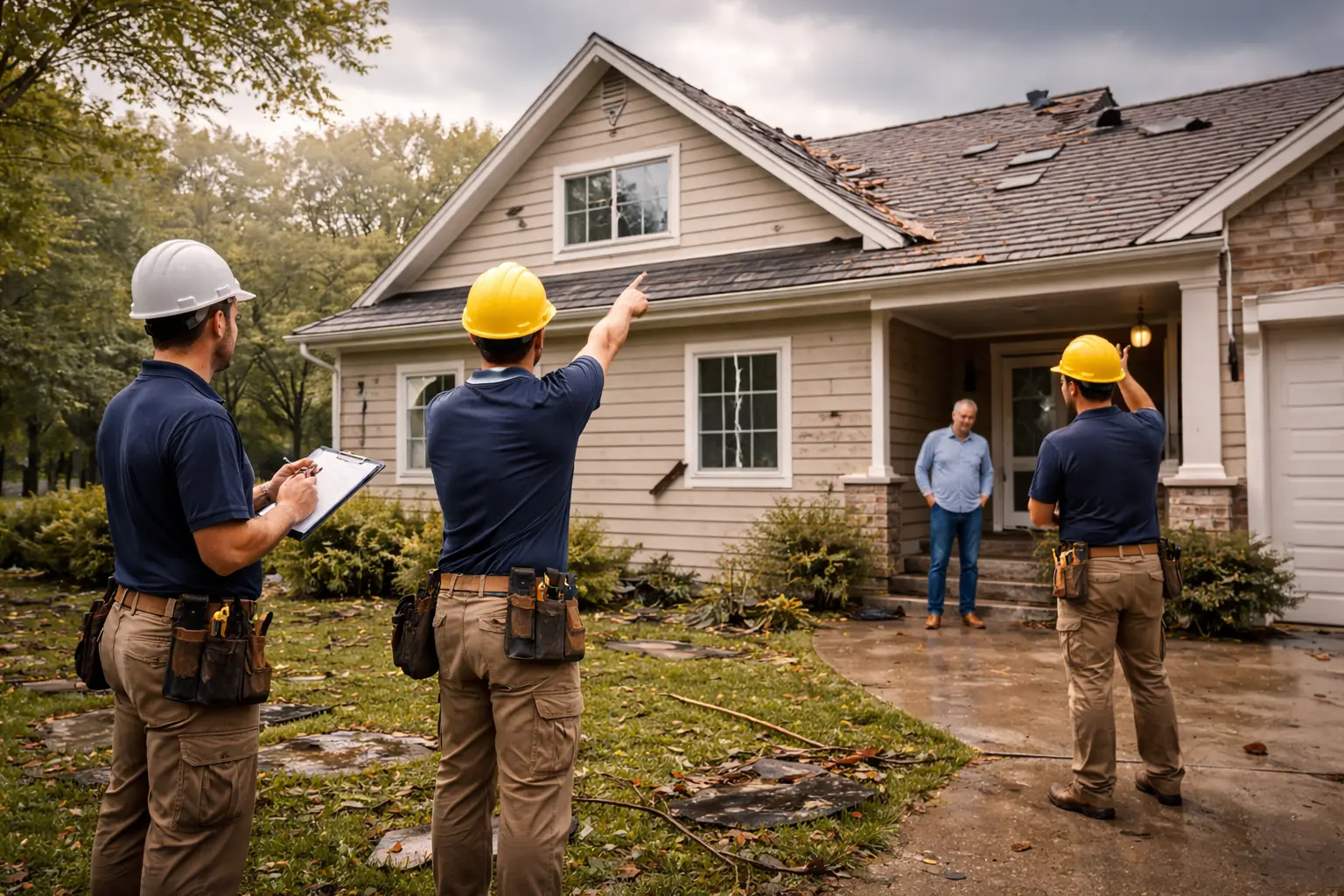
Roof emergencies rarely wait for a convenient day. A November windstorm, a heavy limb from an old oak, or a branch loaded with ice can open a section of roof while you have a house full of guests. If it happens to you this holiday season, the goal for the first few hours is simple: keep people safe, slow the water down, and get the right help lined up.
Here is what to do, what to have ready when you call, and why emergency roof tarping is a first step, not the fix.
Step 1: Safety comes first
Before you think about the roof, think about the people in the house.
- Do not climb onto a damaged roof. Wet, icy or storm-damaged roofs are dangerous, especially in the dark.
- Stay away from downed lines and anything touching them.
- Keep everyone out of rooms with a sagging or bulging ceiling. Water-loaded drywall can come down.
- If there is an immediate hazard, call emergency services first.
Photograph damage only from a safe spot, from the ground or through a window.
Step 2: Slow down the water inside
While you wait for help, a few simple moves limit the damage:
- Move furniture, electronics, gifts and valuables away from the leak.
- Catch dripping water with buckets, bins or pots, and lay towels down around them.
- Keep a light on in the affected room so you can watch for changes.
Resist the urge to get on a ladder with a tarp yourself. The risk isn't worth it, and a tarp that is placed wrong can trap water or blow off in the next gust.
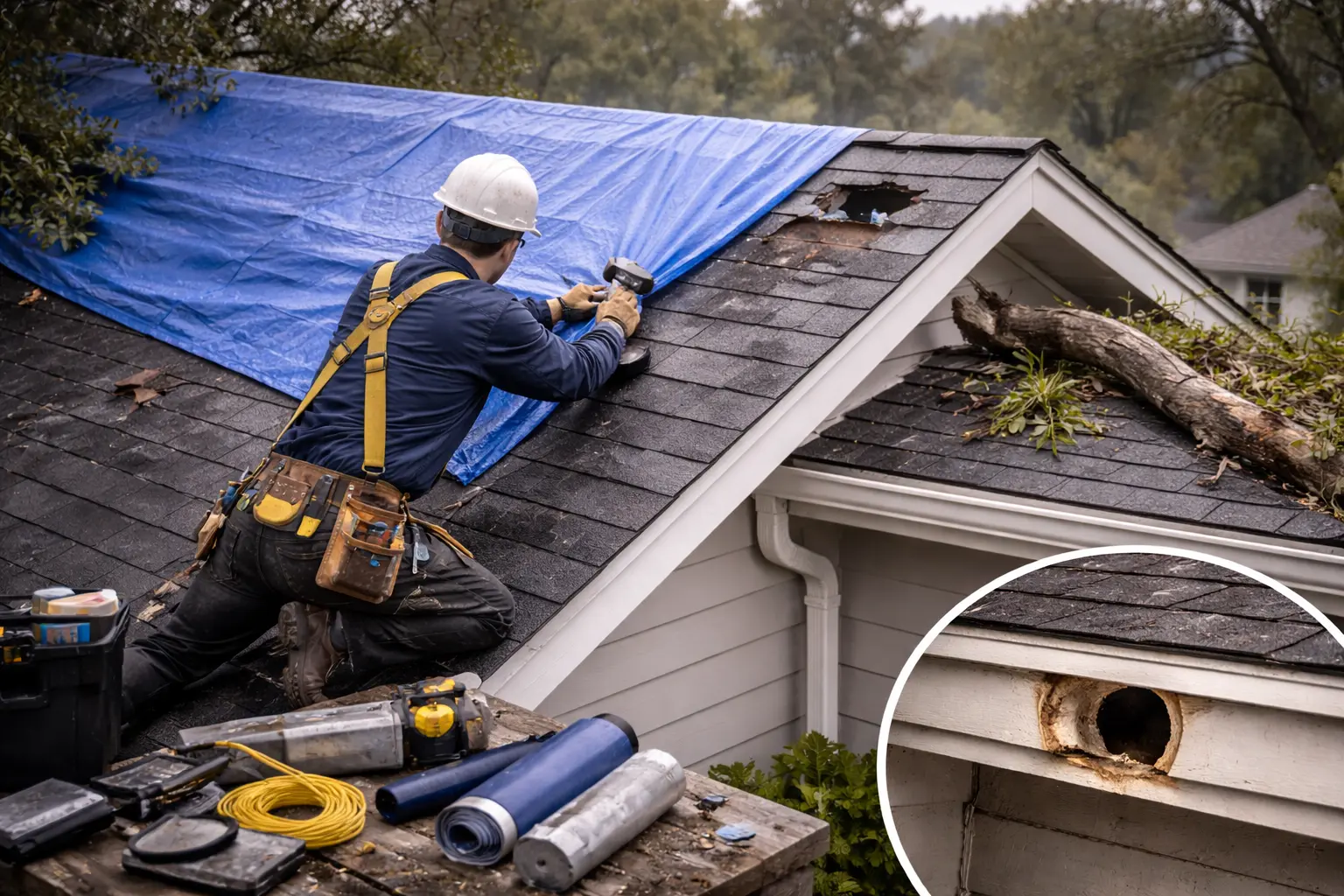
A tarp is temporary protection that buys time until a permanent repair is possible.
Step 3: Call with the right information
When you call us, a few details help us understand the situation and confirm whether our team can safely provide the next step:
- Your address, and whether trees, debris or anything else is blocking access.
- Where water is coming in and whether it is still active.
- What roof damage you can see safely from the ground, like missing shingles, a hole, or a limb on the roof.
- When the storm hit and anything you have already done to protect the house.
Mention any active leak or urgent concern right away. Weather, roof condition and safe access all affect timing, so availability is confirmed by phone. Our office hours are Monday to Friday, 8 a.m. to 4 p.m., and you can call (314) 370-7897.
Before the holidays: save our number in your phone now, and take a few dated photos of your roof from the ground on a clear day. If a storm hits later, you will be glad you have both.
Why a tarp is temporary
An exposed or storm-damaged roof can let water in before permanent repairs are possible. A tarp covers the opening and slows that down. But it is temporary protection, not a new roof and not a lasting leak repair.
Tarps can shift, tear or break down in the weather that follows, and our winters bring wind, freezing rain and snow. Once conditions allow a safe assessment, the damaged shingles, roof details and the materials underneath all need a look so the right permanent repair can be planned. Leaving a tarp in place as the fix just sets up the next leak.
What happens after the tarp
When the weather clears, the next step is a full assessment. We document the damage with photos and measurements and walk you through your options in plain language, whether that is a roof repair or something larger. Our storm damage restoration page covers what that process looks like for hail and wind damage.
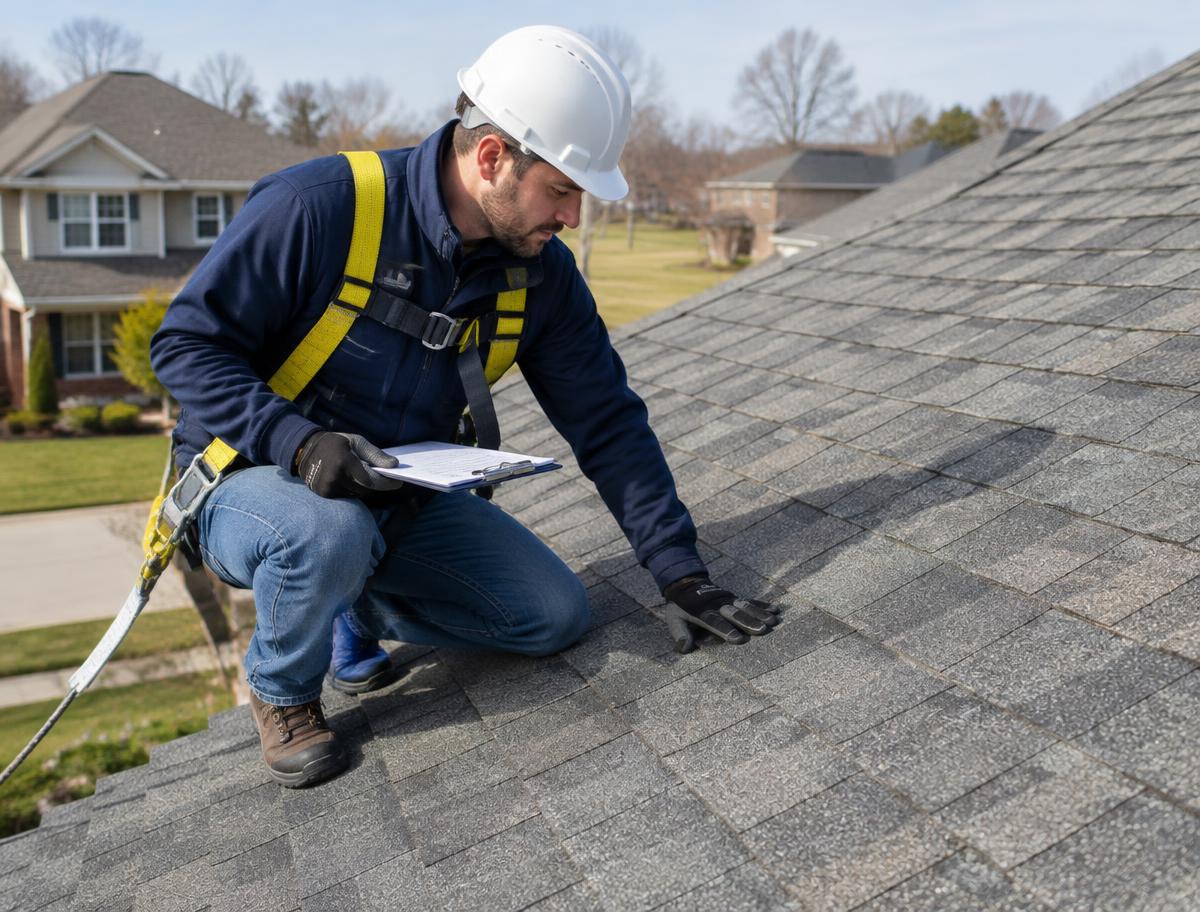
Once the weather clears, a full assessment decides the permanent repair.
A note on insurance
Keep records of the damage and of any temporary protection, including photos, dates and receipts. Your insurer may ask for them. Just don't assume a tarp guarantees claim coverage. Every policy is different, so talk with your insurance company about what applies to you.
Documentation from before a storm can help too. Members of our Solutions Plus Protection Plan get a yearly roof inspection with dated photos and a written condition report, which builds a record of what the roof looked like before the damage. Our earlier storm roof damage checklist has more on what to record after a storm.
We are here for St. Louis homeowners, holidays included
From our Ellisville office, we help homeowners across St. Louis County, St. Charles County, Franklin County and the Metro East, including Wildwood, Chesterfield, Kirkwood, Florissant, St. Charles, Wentzville, Washington, Belleville and Alton. If a storm opens up your roof this season, call us with your address and what you are seeing, and we will confirm availability and the safest next step.
Storm damage or an active roof leak? Call (314) 370-7897 or visit exteriorbuildingsolutions.com.
Frequently asked questions
What should I do while waiting for a tarp?
Move valuables away from the leak, catch water with containers and stay off the roof. Call us to describe the damage and discuss temporary protection.
Is emergency tarping available immediately?
Timing depends on weather, safe access and team availability. Call to confirm; we don't promise a specific response time or round-the-clock availability.
Can I leave the tarp on as a permanent repair?
No. A tarp is temporary protection. The damaged roofing materials and the underlying cause still need an assessment and a proper permanent repair.
Does insurance cover emergency roof tarping?
It depends on your policy. Keep photos, dates and receipts for the damage and any temporary protection, and check with your insurer about what is covered.