
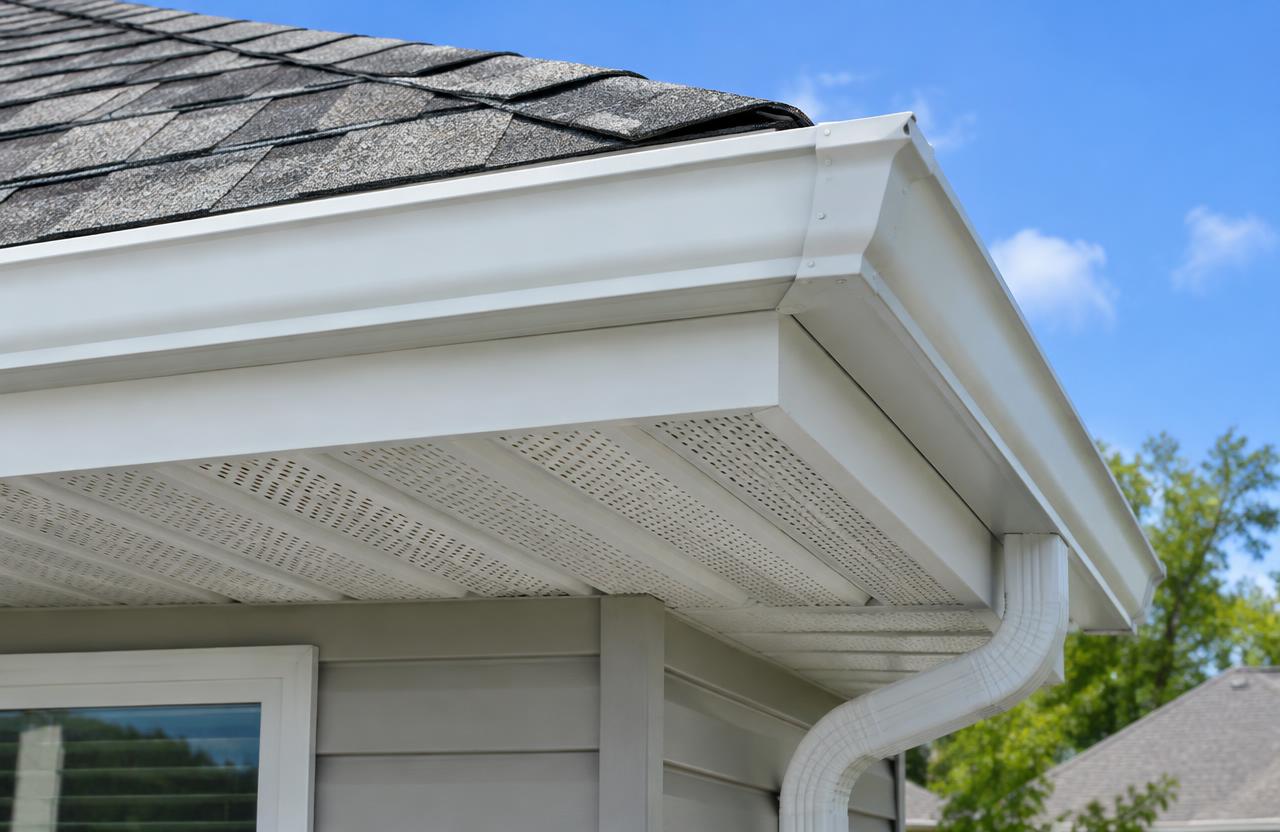
Most people never look at the edge of their roof until a gutter starts to sag or a squirrel moves into the attic. That edge is where your soffit and fascia live, and late fall is the best time to check them. Once the leaves are down you can actually see the eaves, and fixing rot now keeps winter ice and spring storms from turning a small repair into a big one.
This guide covers what soffit and fascia do, the signs of trouble you can spot from your driveway, your material options, and how we handle repairs for homes in Ellisville, Wildwood, Chesterfield, Kirkwood, Webster Groves and the rest of Greater St. Louis.
What soffit and fascia actually do
The two get mentioned together, but they have different jobs.
Fascia: the board your gutters hang on
Fascia is the long vertical board that runs along the edge of the roof. It caps the ends of the rafters, gives the roofline its finished look and, most importantly, carries your gutters. When fascia rots, the gutter fasteners lose their grip and the gutters start to pull away.
Soffit: the underside of the overhang
Soffit is the horizontal surface under the overhang, between the fascia and the wall of the house. Vented soffit panels pull fresh air into the attic. That air works with your ridge or roof vents to keep heat and moisture down, which matters for your shingles and for winter ice dams.
Put simply, fascia faces out and soffit faces down. Together they seal the eaves and protect the roof framing from weather and animals.
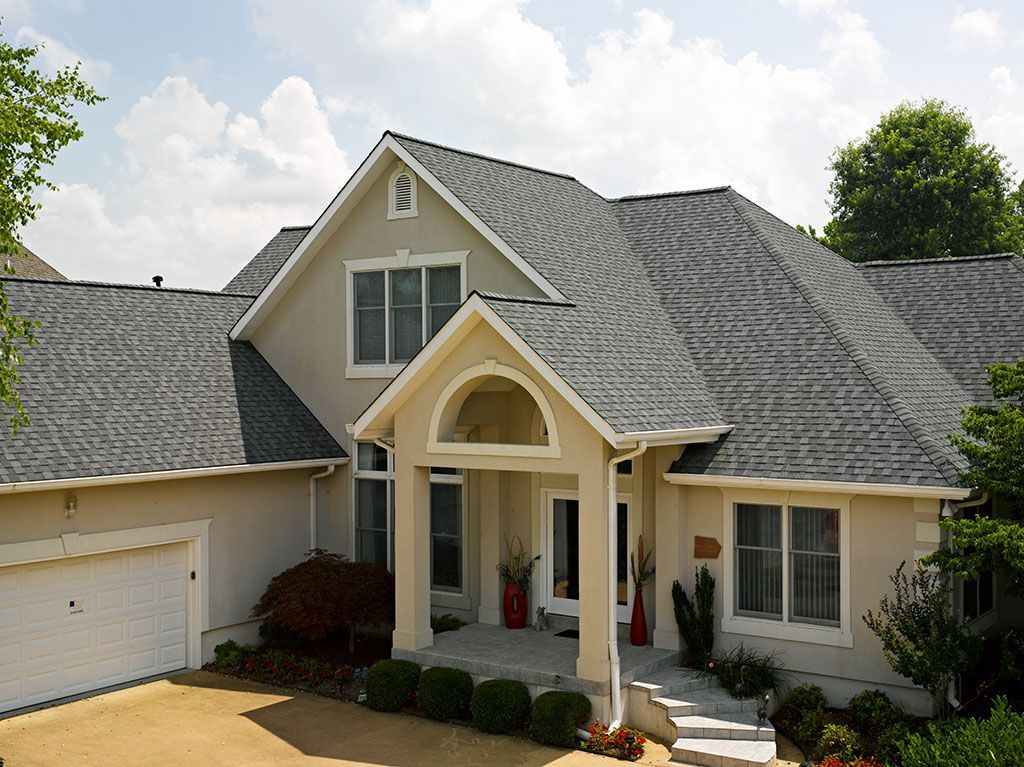
The roof edge works as one system: shingles, drip edge, fascia, soffit and gutters.
Why the roof edge takes a beating in a St. Louis winter
Fascia takes more water than almost any other wood on the house. Here is where that water comes from in a typical St. Louis winter.
- Gutter overflow. Gutters packed with late leaves spill over the back edge and soak the fascia board.
- Ice dams. When snow melts on a warm roof and refreezes at the cold edge, water backs up behind the ice and can work into the fascia and soffit. We explain the cause in our earlier post on why winter roof leaks happen.
- Freeze and thaw. Our winters swing above and below freezing. Water that gets into a crack freezes, expands and opens the crack a little more each time.
- A missing or failed drip edge. Without it, runoff wicks behind the gutter and straight into the wood.
Soffit has a different problem. Blocked or solid soffit can starve the attic of air. A stuffy attic holds moisture, which can lead to condensation, extra shingle wear and more ice dams in winter.
Late fall advantage: with the leaves down and the weather still workable, November is a good time to see the eaves clearly and fix rot before ice and snow load up the roof edge.
Signs your soffit and fascia need repair
Most problems show from the ground. Walk around the house on a clear day and look up at the eaves. Watch for:
- Peeling paint, soft spots or dark stains on the fascia boards.
- Gutters pulling away from the roof edge, sagging or tilting.
- Soffit panels that are cracked, wavy, loose or missing.
- Nests, droppings or chewed holes at the eaves.
- Water stains or mold on the underside of the overhang.
- Ice dams at the roof edge, or heavy frost in the attic in winter.
On older homes with original wood trim, like many in Kirkwood, Webster Groves, Affton and Brentwood, rot usually shows up first at the corners and near downspouts, where water collects. On homes with vinyl soffit, look for panels that have worked loose or gone wavy after a windstorm.
Animals are a winter warning sign
As temperatures drop, birds, squirrels and insects look for shelter. A gap in the soffit or a soft fascia corner is an easy way in. If you hear scratching above the ceiling this time of year, check the eaves before you assume the problem is inside.
Vinyl, aluminum or wood: choosing materials
When we replace soffit and fascia, homeowners usually choose from three options.
- Vinyl soffit. Upkeep: No painting; occasional washing. Best for: Vented eaves and low-maintenance homes.
- Aluminum fascia wrap. Upkeep: No painting; covers wood boards. Best for: Protecting fascia behind gutters.
- Wood soffit and fascia. Upkeep: Regular repainting. Best for: Historic homes and custom colors.
Vinyl soffit comes in solid and vented panels and doesn't need painting. Aluminum or metal fascia wrap is formed on site to cover new or sound wood fascia boards, so the roof edge stays protected without repainting. Wood can be painted any color and suits historic homes, but it needs regular repainting to stay protected. We help you match materials and colors to your trim, gutters and siding.
Repair or replace?
It often doesn't have to be all or nothing. Short sections of rotted fascia or a few damaged soffit panels can be replaced on their own. Widespread rot or failing attic ventilation is a better fit for full replacement.
Can you just paint over it? If the wood is sound, yes. But painting over rot only hides it, and the rot keeps spreading underneath. We check the wood first and tell you which option makes sense.
How we replace soffit and fascia
Soffit and fascia work is a roof-edge job, so the order matters:
- Rotted fascia boards and any damaged rafter tails are cut out first.
- New fascia boards go on.
- Soffit panels and fascia wrap are installed.
- Gutters go back up, along with drip edge and any roofing details at the edge.
Because the gutters usually have to come off and go back on, we coordinate the work with gutter replacement, drip edge and roofing. If you are already planning a new roof or new gutters, that is a good time to do the soffit and fascia too. Combining the projects avoids removing and reinstalling gutters twice.
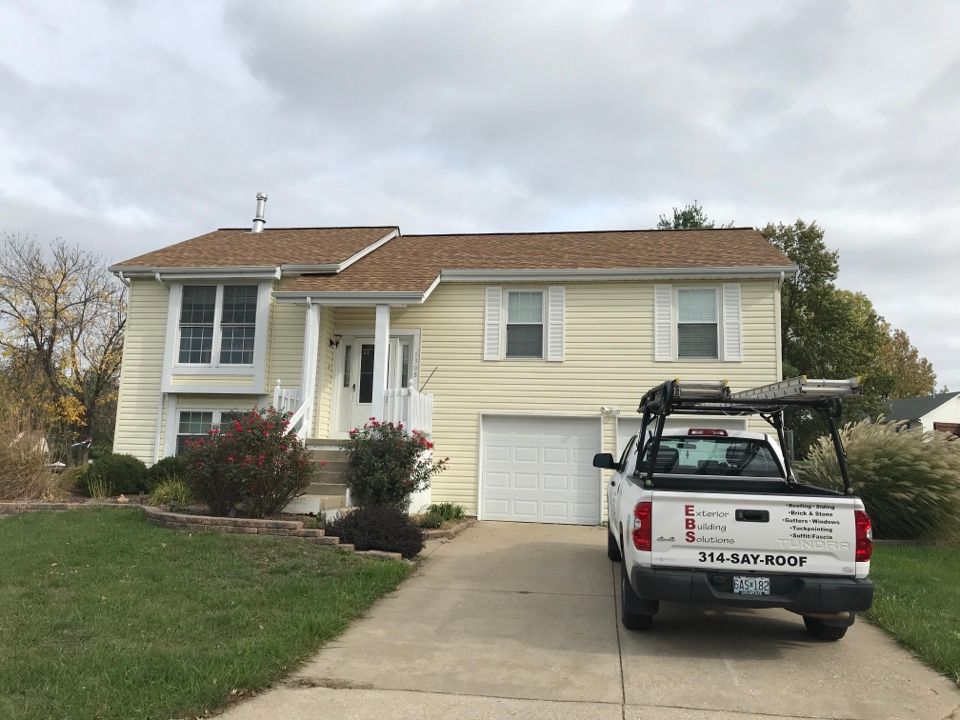
Our crews coordinate soffit and fascia work with gutters and roofing so nothing gets taken off twice.
Get your roof edge checked before winter
If you are seeing soft fascia, sagging gutters or damaged soffit, call our Ellisville office with your address and what you are seeing. We will set up a time to look, document the conditions with photos and measurements, and give you clear options and a written estimate. We serve St. Louis County, St. Charles County and the Metro East, including Chesterfield, Wildwood, Kirkwood, Florissant, St. Peters, O'Fallon, Belleville and Glen Carbon.
Seeing rot, sagging gutters or damaged soffit? Call (314) 370-7897 or request a free inspection at exteriorbuildingsolutions.com.
Frequently asked questions
What is the difference between soffit and fascia?
Fascia is the vertical board along the roof edge that holds the gutters. Soffit is the horizontal panel underneath the overhang that closes off the eave and often vents the attic.
How much does it cost to replace soffit and fascia?
Cost depends on how many linear feet need work, how much wood is rotted, the materials you choose and whether gutters must be removed. We give you a written estimate after looking at your roof edge.
Can soffit and fascia be repaired instead of replaced?
Often, yes. Short sections of rotted fascia or a few damaged soffit panels can be replaced on their own. Widespread rot or failing ventilation is a better fit for full replacement.
Do soffit vents help prevent ice dams?
They help. Vented soffit lets fresh air into the attic, and paired with roof or ridge vents it helps control the heat and moisture that wear on shingles and contribute to ice dams.