
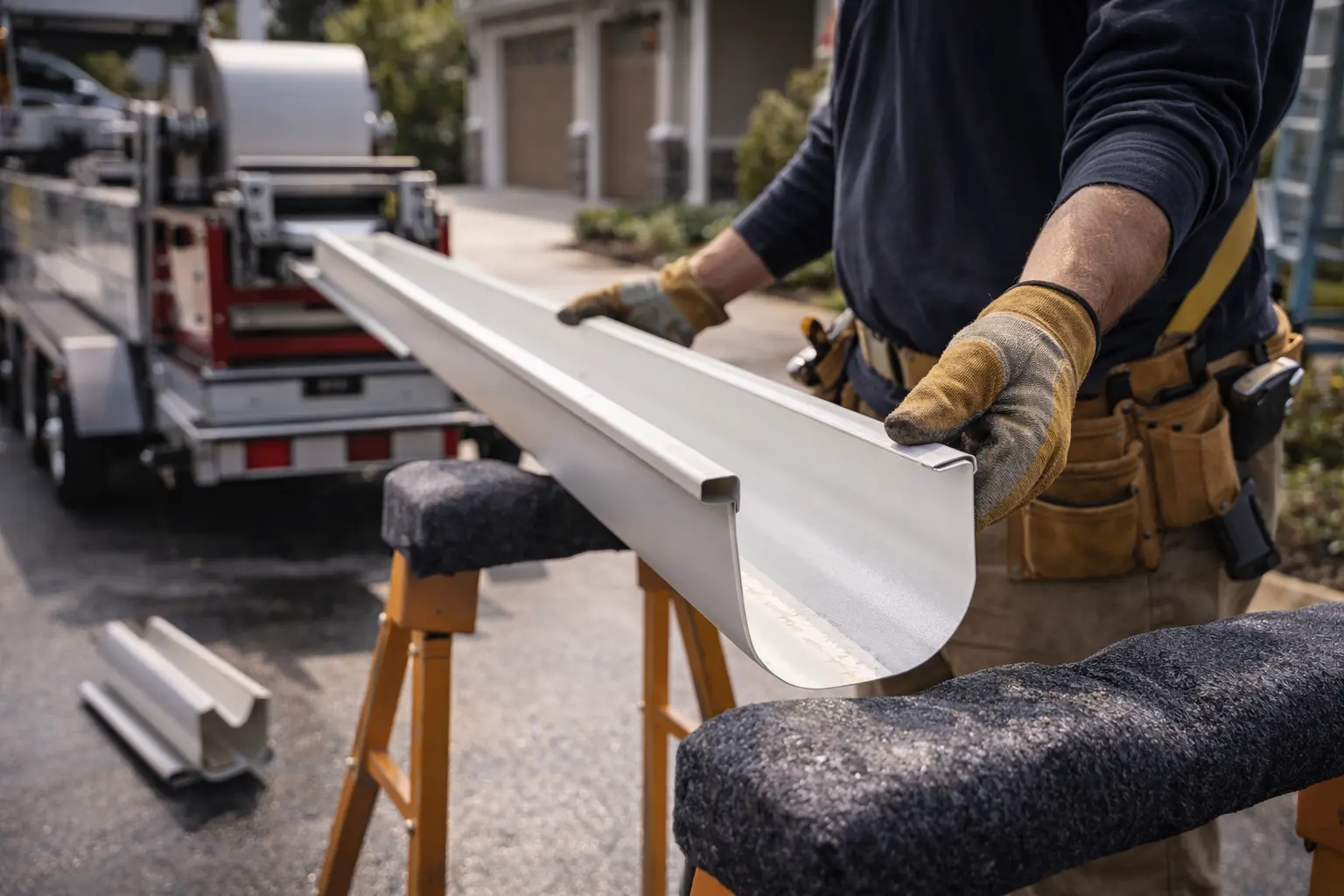
The leaves are mostly down across Greater St. Louis, and the first hard freeze is close. That makes now the right time for a quick gutter check. Gutters that overflow or pull loose in November tend to get worse once ice and snow add weight, and some problems that look like a gutter issue are really a fascia or drainage issue underneath.
Here is a simple checklist you can do from the ground, what each problem usually points to, and how to tell whether your gutters need a repair or a full gutter replacement before winter.
First, how gutters are supposed to work
Gutters collect the water running off your roof. Downspouts carry it to a discharge point away from the house. When either part fails, water ends up where you don't want it: down the siding, against the foundation, on a walkway that freezes, or soaking into the fascia board the gutters hang on.
That is why a good gutter decision looks at the whole system, not just the trough. The roof edge, the fascia and where each downspout empties all matter.
Your 15-minute late-fall gutter checklist
Do this on a dry day, from the ground, with binoculars if you have them. Do not climb a ladder onto a wet or icy roof edge. If you can, also take a look during the next rain from a safe spot inside or under a porch.
1. Overflow points
Watch where water spills over the gutter during rain. Overflow can come from debris, the wrong pitch, too little capacity for that section of roof, or a restricted downspout. One overflow spot after a heavy storm is a clue. The same spot overflowing every rain is a pattern worth fixing.
2. Sagging or separation
Look along each run for dips, gaps between the gutter and the roof edge, or sections tilting outward. Gutters pulling away often means the fascia behind them is soft, and new hangers alone won't hold in rotted wood.
3. Seams, corners and end caps
Drips at the joints and corners on a dry day after rain usually mean failing seams. A few leaky seams can be repaired. Leaks at many joints suggest the system is near the end of its life.
4. Downspout discharge
Follow each downspout to the ground. Where does the water go? It should be directed away from the foundation without dumping onto a walkway, a driveway that will freeze, or a neighbor's yard.
5. Water stains and pooling
Look for dark streaks on the siding below the gutters, worn spots in the mulch, and puddles that sit near the foundation after rain. These show you where the system is losing water.
6. The fascia above the gutters
Peeling paint, dark stains or soft spots on the fascia board are a sign water has been getting behind the gutter. We cover this in more detail in our post on soffit and fascia repair.

Mature trees mean more leaves in the gutters and more chances for overflow.
Not sure what you are looking at? Snap a few photos and try the gutter photo check on our site, or call and describe where the overflow or sagging is.
Does overflow always mean new gutters?
No. Plenty of overflow comes down to blockages, pitch or a downspout problem, and those can often be fixed without replacing anything. The right first step is finding the cause and checking the condition of the existing gutters.
Replacement starts to make more sense when you see several of these at once:
- Overflow at the same spots even when the gutters are clean.
- Leaks at many seams and corners, not just one or two.
- Repeated sagging or separation along long runs.
- Fascia rot behind the gutters that needs repair anyway.
- Downspouts in the wrong places for how water comes off your roof.
- A new roof or new siding planned, where coordinating the work saves doing the gutters twice.
What a gutter replacement should cover
A gutter replacement is more than picking a color. Roof area, valleys and spots where runoff concentrates all affect what your home needs. When we plan a replacement, we look at:
- Gutter profile and size for the amount of water each section of roof sends down.
- Downspout layout and exactly where each one will discharge.
- Fascia and attachment areas, so new gutters go onto sound wood.
- Related roof-edge work, like drip edge, soffit or nearby siding, and whether it should happen first.
- A clear scope listing removal, replacement runs, downspouts and any supporting repairs.
You can compare common options on our gutter types page.

Valleys and long roof planes concentrate runoff, which affects gutter size and downspout layout.
A word on gutter guards
Homes under mature oaks and maples in places like Kirkwood, Webster Groves, Wildwood and Chesterfield fill gutters fast, so guards come up a lot. They can help, but no guard eliminates every cleaning need. Designs and debris conditions vary, so ask how the product you are considering gets cleaned and maintained. Also keep expectations realistic: new gutters alone can't promise a dry basement or fix every site drainage issue.
Why it is worth doing before the freeze
Ice and snow add weight to gutters that are already loose, and frozen downspouts send meltwater back over the edge. Fixing overflow, separation and soft fascia in November gives your roof edge a better chance through the freeze and thaw cycles that follow. It also means the work happens while the weather still cooperates.
Schedule a gutter check
Call our Ellisville office with the spots where you see overflow or sagging and any roof-edge concerns. We will inspect, document what we find with photos and measurements, and give you options in plain language, whether that is a repair or a full replacement. We serve St. Louis County, St. Charles County, Franklin County and the Metro East, including Ellisville, Chesterfield, Florissant, St. Charles, Wentzville, Washington, Belleville and Alton.
Gutters overflowing or pulling loose? Call (314) 370-7897 or request a free inspection at exteriorbuildingsolutions.com.
Frequently asked questions
How often should gutters be cleaned?
Many homes need cleaning at least twice a year, and more often under mature trees. Clogged gutters can lead to overflow, fascia rot and water near the foundation.
Does gutter overflow always mean I need replacement?
No. Blockages, pitch or downspout issues are often the cause. Find the cause and check the condition of the existing gutters before choosing replacement.
Why are my gutters pulling away from the house?
Gutters that separate from the roof edge often have soft or rotted fascia behind them, so the fasteners lose their grip. The fascia usually needs repair before the gutters can be reattached or replaced.
Will gutter guards mean no maintenance?
No. Guard designs and debris conditions vary. Ask about cleaning access and maintenance requirements for the specific product.