

Most homeowners sign a roofing contract based on a single in-home conversation with someone they just met, instead of their local proven roofing contractors. That is not necessarily the wrong way to make the decision, but it becomes the wrong way when the decision happens faster than the warning signs can register. By the time the problems show up, the deposit is spent, the contractor is not returning calls, and the warranty they promised turns out to cover less than they described.
These five red flags do not require any special knowledge to spot. They just require slowing down for ten minutes before you reach for the pen. Every one of them is something you can check before you commit, and every one of them has shown up on jobs that ended badly for St. Louis homeowners who wish they had known what to look for.
Red Flag 1: They Showed Up at Your Door Right After a Storm
What it looks like
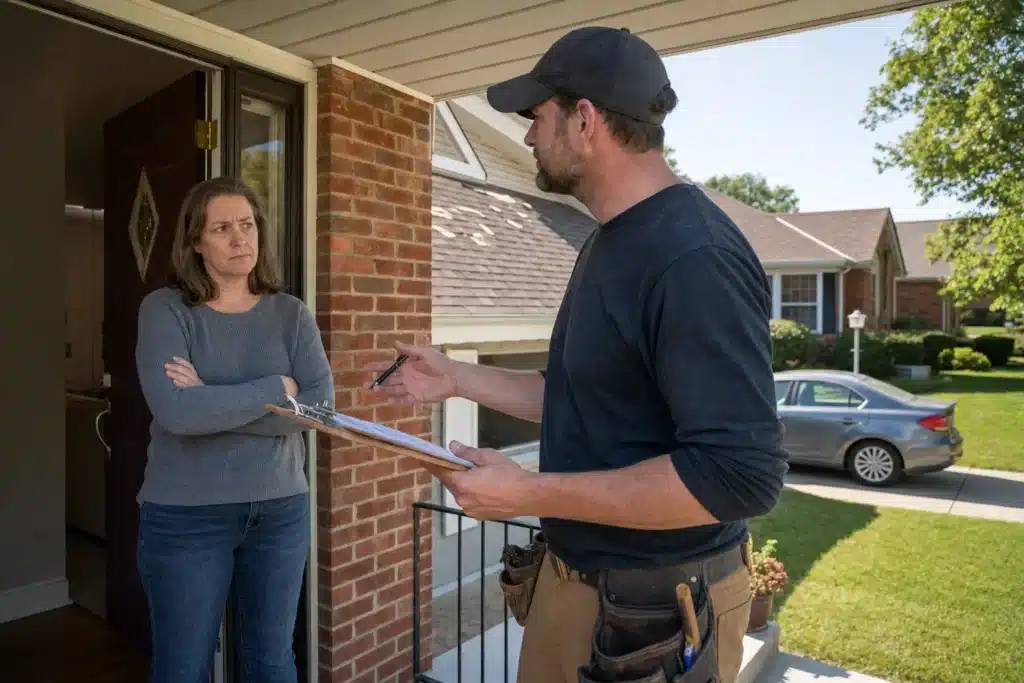
A crew shows up within a day or two of a significant storm, hail or wind event in your neighborhood. They offer a free inspection on the spot and may mention that several of your neighbors have already scheduled theirs. The truck is sometimes unmarked or carries out-of-state plates. The person at the door is friendly, moves quickly, and is ready to start the inspection right now if you say yes.
Why it matters
This is the profile of a storm chaser: an out-of-state roofing crew that follows weather events across the country, works a neighborhood for a few weeks, and moves on. They are not necessarily unskilled, but they have no local address, no established history in the St. Louis market, and no reason to stand behind the work once they pack up and leave. If a leak shows up eight months after the job, finding them is genuinely difficult. Getting them back to fix it is nearly impossible.
St. Louis sits in a weather corridor that attracts these crews every spring and fall. West County, St. Charles County, and South County neighborhoods are regular targets after any significant storm event. The timing of that knock on your door is not a coincidence.
A company that will not be here next year should not be on your roof today.
What to do instead
Take their card and tell them you will be in touch. Do not allow anyone on your roof or sign anything that day. Search the company name in the Missouri Secretary of State business registry at sos.mo.gov and note the formation date. If they registered in Missouri within the past year or do not appear at all, that is the answer you need.
Red Flag 2: They Are Pushing You to Sign Today
What it looks like
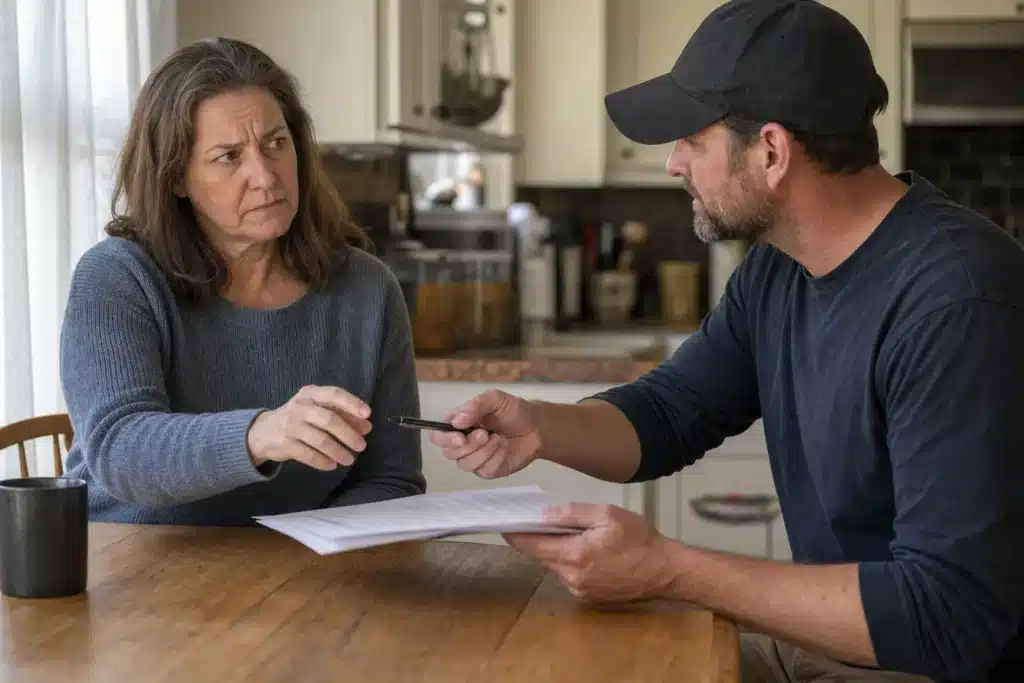
The estimator tells you the price is only valid for today, or that the crew slot they have available will be gone by tomorrow if you do not commit right now. Sometimes the pressure is softer, delivered as a favor: they want to help you get ahead of the other homeowners calling in after the storm. Either way, the message is the same. Sign before you have time to think.
Why it matters
Reputable roofing contractors in St. Louis do not pressure homeowners to sign the same day because they do not need to. They have steady work from referrals and repeat customers, and they know a homeowner who takes a day to think through a decision is still likely to call back. When a contractor manufactures urgency, it is because a slower decision is a better one for you and a worse one for them. The pressure is the strategy.
A contractor who needs your signature today before you have time to compare is telling you exactly how they operate when the stakes get higher.
What to do instead
Tell them you need 24 to 48 hours. A contractor worth hiring will say that is fine, give you their card, and follow up the next day. One who increases the pressure in response to that request has just shown you who they are.
Red Flag 3: The Quote Is a Single Number With No Breakdown
What it looks like
The roof replacement estimate arrives as a one-page document or a brief email with a total cost at the bottom and not much else. No materials listed by manufacturer or product line. No separate labor figure. No mention of underlayment type, decking replacement cost per sheet, drip edge, flashing details, or what cleanup includes. Just a number.
Why it matters
When a quote has no breakdown, you have no way to know what is included or what has been left out. Roofing has a floor, and contractors who land well below the competition are cutting something to get there. The most common cuts are underlayment quality, the number of nails per shingle, flashing at chimneys and wall transitions, and cleanup. Not one of those cuts is visible from the ground on the day the job finishes. They show up as leaks, premature granule loss, and moisture problems in the attic two or three years later, often after the contractor is gone and the warranty turns out not to cover the installation quality.
The cheapest roof in St. Louis is usually the most expensive one you will ever have. It just takes a few years for the bill to come due.
What to do instead
Ask every contractor for a written, line-by-line quote before you agree to anything. It should specify the shingle manufacturer, product line, and color. It should list labor as a separate line. It should note whether the price includes decking replacement if needed, what underlayment will be used, how flashing will be handled, and what cleanup covers. A contractor who cannot provide that level of detail is telling you the breakdown is not something they want you looking at too closely.
Red Flag 4: They Want Full Payment Before the Job Starts
What it looks like
The contractor asks for the full project cost upfront before any work has started or materials have been ordered. Sometimes this is framed as a convenience, or as a discount for paying early. In some cases it is presented as standard practice, as though every contractor operates this way.
Why it matters
A deposit at signing is normal and expected. It typically covers the cost of ordering materials and holding the crew’s schedule. Full payment before any work begins is not standard, and any contractor who tells you otherwise is not being straight with you. Once they have all the money, you have given up every bit of negotiating power you had. There is nothing holding them to a schedule, a quality standard, a start date, or a completion date. The standard structure for a roofing job is a deposit up front with the balance due on completion. Larger jobs are sometimes broken into thirds tied to project milestones.
Your negotiating power disappears the moment full payment changes hands. Keep it until the job is done and you have walked the site.
What to do instead
Never pay the full amount before work begins. A reasonable deposit is fair. If a contractor insists on full payment upfront and frames a discount as the reason, that framing should make you more cautious, not less.

Red Flag 5: You Cannot Verify Anything About Them
What it looks like
The company name does not show up cleanly in a basic Google search. There is no BBB listing, or the listing is very recent. The address they gave you does not match anything in their online profiles. Their Google reviews all appear to have been posted in the same short window, with nothing much before or since. The website looks professional but there is no physical address listed anywhere on it.
Why it matters
A roofing contractor who has been operating in the St. Louis market for years leaves a trail you can follow. They show up in the Missouri Secretary of State registry with a formation date that lines up with how long they say they have been in business. Their BBB listing, Google Business Profile, and website all show the same address. Their reviews have been coming in steadily for years, not all in one week. Their license and insurance are easy to verify because they are used to being asked.
When none of that checks out, you have no way to hold anyone accountable if the job goes wrong. You cannot file a complaint with the BBB against a company that does not have a listing. You cannot track down a contractor through the Secretary of State if they are not registered. And you cannot rely on a warranty from a company that may not exist under that name six months from now.
If ten minutes of searching cannot tell you who this company is, a damaged roof will not tell you either.
What to do instead
Before you agree to any inspection, check three things. Search the company name in the Missouri Secretary of State registry at sos.mo.gov and confirm their formation date. Look them up on BBB.org and read the complaint history, not just the overall rating. Cross-check the address on their website against their Google Business Profile. A contractor with nothing to hide will come up consistently across all three. One who does not will usually show the gaps before you have asked a single question.
The Common Thread Behind Every Red Flag
Every warning sign on this list is a version of the same problem: a contractor who is optimizing for getting your signature, not for doing the job well. The pressure tactics, the vague quotes, the upfront payment requests, the inability to verify a basic history. None of these are accidental. They are the operating style of a contractor who knows that a homeowner who slows down, compares, and checks is a homeowner who is less likely to sign.
The good news is that spotting them does not require any special knowledge. It requires ten minutes and the willingness to slow down before you commit. Every contractor on this list was able to get someone’s signature. The homeowners who avoided problems are the ones who paused long enough to ask a few questions first.
For a complete guide on how to choose the right roofing company near you in St. Louis, including the full list of questions to ask before you sign anything, read our guide on how to choose the best roofing company near you in St. Louis. Contact us for a free inspection and our roofing estimators will pay you a visit.