

There are more than 1,100 roofing companies operating in the St. Louis area. Some have been here for decades. Some showed up after the last hail storm and will be gone before the next one. The problem is that from the outside, many of them look the same. Same trucks, same yard signs, same promise of a free estimate. Knowing how to tell the difference before you sign anything is worth the time it takes to read this.
This guide walks you through every step of choosing a roofing contractor near you in St. Louis, from the first phone call to understanding what a finished job should look like. If you already know what you need, you can find a roofing company near you in St. Louis right now.
Ready to get started? EBS serves 50+ communities across the St. Louis area.
Or call us directly: (314) 729-7663
1. Start With Local – Why Proximity Actually Matters
What local really means for your roof project
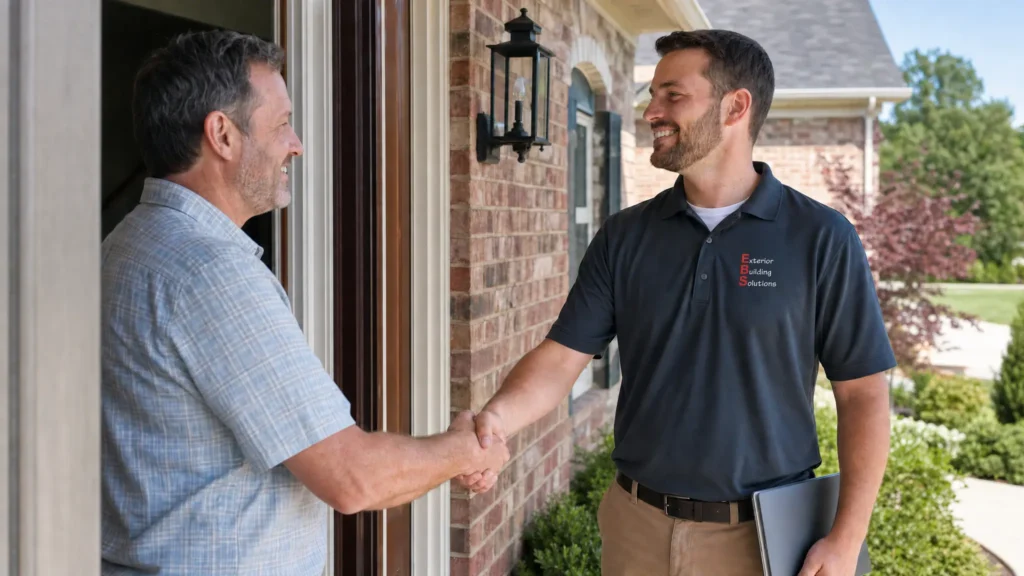
A local roofing company has something at stake that a national chain or out-of-state crew does not. Their reputation exists in the same neighborhoods where they work. Their name comes up when your neighbor mentions they are looking for a roofer, and that keeps them honest in a way that a company with no local ties never has to be. When something goes wrong six months after the job, a local company picks up the phone.
How national roofing chains operate differently
National roofing companies are not necessarily bad, but they operate in a way most homeowners do not expect. The salesperson who comes to your door may work for the national brand. The crew that shows up to do the work is often a local subcontractor the national company hired for the job. You may never meet the actual roofers until they are already on your roof, and if there is a warranty issue later, getting the right person on the phone can be a process. The same vetting approach applies when choosing any contractor near you, including for windows and other exterior work.
What proximity means for response time and accountability
A St. Louis roofing contractor with a real office and a local crew can respond to a warranty call, a question, or an emergency repair the same day in most cases. They are not routing your call through a national customer service center. They know your neighborhood, they know the housing stock, and they know how the weather in West County or St. Charles County affects exterior materials over time. That knowledge matters when they are spec-ing your job.
A contractor who lives and works in the same community has more reason to do the job right the first time than one who will be across the country before your shingles settle.
2. Verify Licensing and Insurance Before the First Conversation Goes Any Further
What Missouri requires from roofing contractors
Missouri does not have a single statewide roofing license, which surprises most homeowners. Licensing in this state is handled at the county and city level. St. Louis County, St. Charles County, and the City of St. Louis each have their own requirements. Some require a general contractor license. Some require specific trade registration. Before you hire anyone, ask them directly what license they hold and in which jurisdiction. A contractor operating without the right local credentials is a risk you do not need.
General liability insurance versus workers compensation: know the difference
General liability covers damage to your property if something goes wrong during the job. Workers compensation covers the crew if someone is injured while working on your roof. Both matter, and both need to be active before a single person steps on your property. If a crew member falls and the contractor does not carry workers comp, the injury claim can come back to your homeowner’s insurance. That is not a theoretical risk. It happens.
How to verify coverage before you commit
Ask every contractor you are considering for a certificate of insurance before any work is scheduled. The certificate should name their insurance carrier, list the policy numbers for both general liability and workers comp, and show the coverage amounts. Then call the carrier directly and confirm the policy is active. A certificate can be printed at any time and may not reflect a cancelled policy. That one phone call takes three minutes and protects you completely.
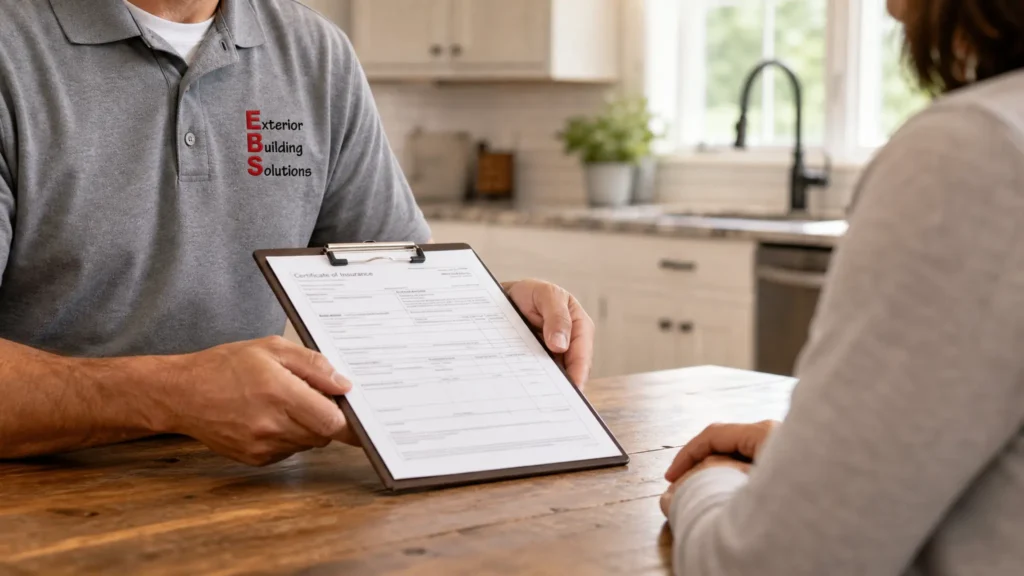
Never let any contractor begin work on your property without first holding a current certificate of insurance in your hand.
3. Read Reviews – But Know What You Are Actually Reading For
Where to find reliable roofing reviews in St. Louis
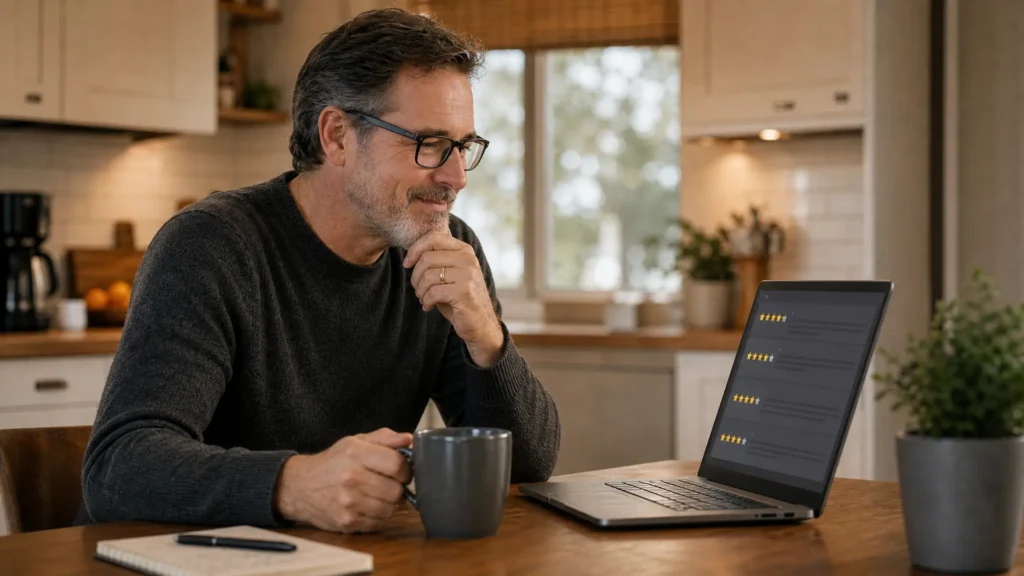
Google reviews are the most reliable starting point for most homeowners because they are tied to a verified Google account and are harder to fabricate at scale. The Better Business Bureau is useful for checking complaint history and accreditation status. Angi and Expertise.com both publish scored lists of St. Louis roofing companies based on verified customer feedback. Use more than one source and look for consistency across them, not just a single platform with a perfect score.
What a useful review actually looks like
Five stars and one sentence does not tell you much. The reviews worth reading are the ones where a homeowner describes what happened. Look for reviews that mention how the company communicated before and during the job, whether the crew showed up when they said they would, how they handled a problem when it came up, and what the site looked like after they packed up. Those are the details that tell you what working with a company actually feels like.
Review volume and recency both matter
A company with 200 reviews from three years ago and almost nothing recent is telling you something. Either their volume has dropped off significantly or they stopped asking customers to leave reviews. Either way, it is worth asking why. A company actively completing jobs in your area should be generating new reviews regularly. Look for a steady stream over the past six to twelve months, not just a big number with an old date on the most recent entry.
How to read a complaint, not just a rating
Check the BBB complaint history even if the overall rating looks good. Read what the complaint was about and, more importantly, read how the company responded to it. A company that acknowledges a problem, explains what they did to fix it, and follows through is actually showing you something positive. How a contractor handles a difficult situation tells you far more about them than the jobs that went smoothly.
4. Storm Chasers in St. Louis – How to Spot One Before It Is Too Late
What a storm chaser roofing company is
Storm chasers are out-of-state roofing crews that travel to areas hit by hail or wind events, work the neighborhood hard for a few weeks, and move on to the next storm. They are not necessarily incompetent, but they have no connection to your community and no reason to stand behind the work after they leave. By the time you notice a problem with the job, finding them can be difficult. Getting them back is nearly impossible.
The warning signs to watch for
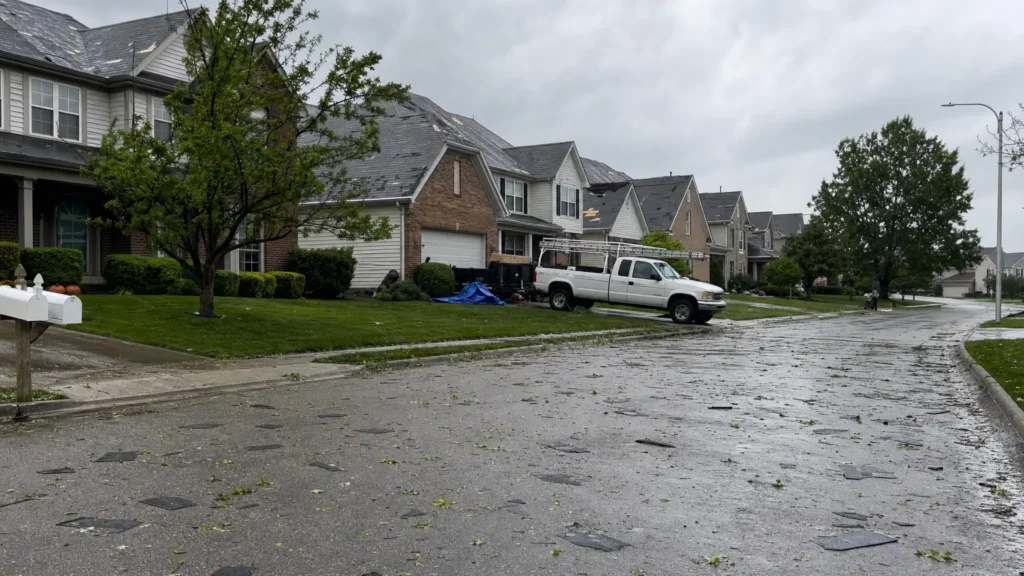
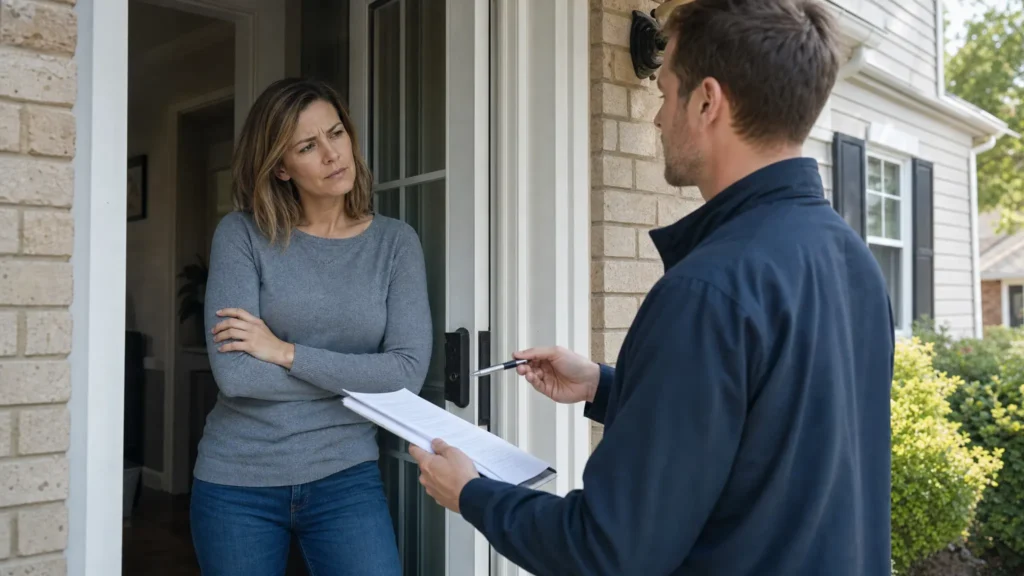
If a crew knocked on your door the day after a storm and offered a free inspection on the spot, that is the first sign. Other signs include no local address that comes up in a search, no BBB listing or a very recent one, reviews that all appeared in the same short window of time, and a hard push to sign a contract the same day they inspect. Legitimate local contractors do not operate this way. They know the work will still be there tomorrow.
Why St. Louis is a specific target
The St. Louis metro sits in a corridor that gets significant hail and wind events every year. West County, St. Charles County, and South County neighborhoods see meaningful storm damage on a regular basis. That makes the area a known destination for out-of-state roofing crews who follow storm paths across the country. After any significant weather event, homeowners in the St. Louis area should be especially careful about who shows up at the door with a clipboard.
How to check where a company actually operates from
Search the company name in the Missouri Secretary of State business registry at sos.mo.gov. If they are registered and operating in Missouri, their formation date and registered agent will be there. Cross-check the address they give you against their BBB listing and Google Business Profile. If those three addresses do not match, ask for an explanation. A company that has been here for years will have a consistent footprint across all of them.
If a contractor showed up at your door after a storm and is asking you to sign something today, slow down. A company that will not be here tomorrow should not be on your roof today. Read our full guide on what to look for when hiring a roofing contractor near you before you commit to anyone.
5. Manufacturer Certification – What It Means and Why It Changes Your Warranty
What contractor certification actually requires
Shingle manufacturers like CertainTeed, GAF, and Owens Corning offer contractor certification programs, but earning them takes real work. CertainTeed’s SELECT ShingleMaster designation, for example, requires the contractor to complete product training, carry proper insurance, demonstrate a track record of quality installations, and maintain good standing with the manufacturer on an ongoing basis. It is not a certificate you get for signing up. You earn it and keep earning it.
How certification changes what warranty you can offer
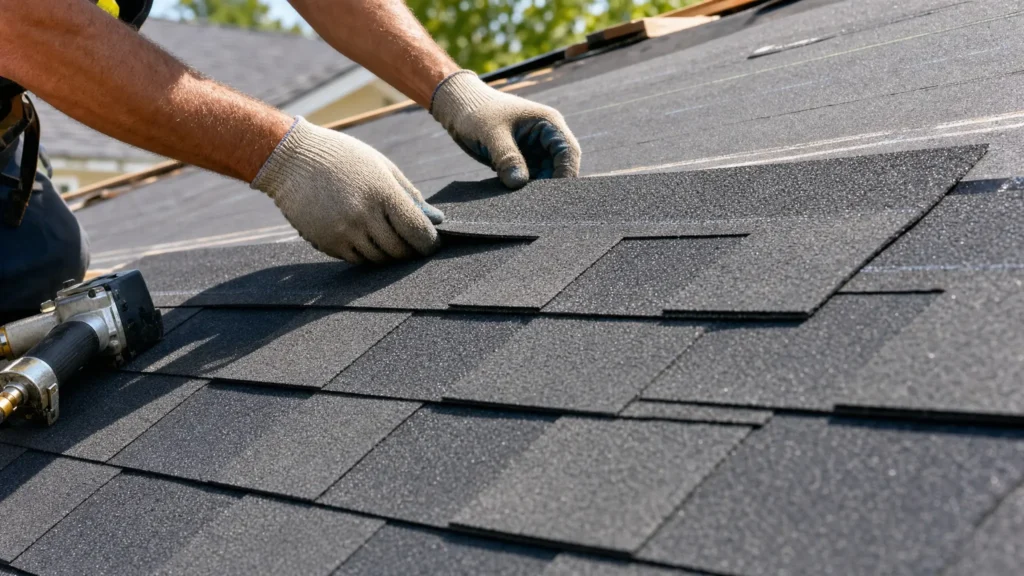
This is where certification has real financial value for you as a homeowner. A non-certified contractor can install a CertainTeed shingle, but they cannot offer the manufacturer’s full system warranty because they have not been vetted by CertainTeed to do so. A SELECT ShingleMaster can offer warranties that can extend up to 50 years with full coverage of both materials and labor under certain conditions. That is a significant difference over the life of your roof.
How to confirm a contractor’s certification before you hire them
Ask the contractor to show you their certification document and the specific product lines they are certified to install. Then look up the certification independently. CertainTeed has a contractor locator on their website where you can verify SELECT ShingleMaster status by company name. GAF does the same for their Master Elite program. If a contractor tells you they are certified but cannot point you to a way to verify it independently, ask more questions.
6. Get Multiple Quotes – and Know How to Compare Them
Why three quotes is the right number
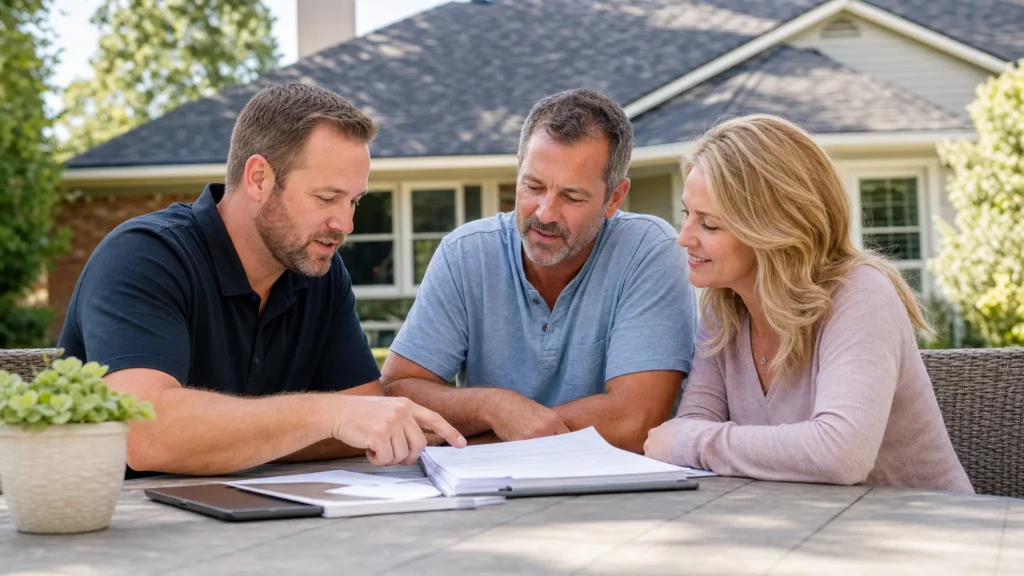
One quote gives you no context. You have no way to know whether the number you are looking at is reasonable or inflated. Two quotes puts you in a binary situation where one feels like the safe choice just because it is lower. Three quotes give you enough data to see patterns. If two quotes are close and one is significantly lower, that is the starting point for an important question about what the low bid is leaving out.
What a complete roofing quote should include
A legitimate quote breaks down every line of the job. Materials should be listed by manufacturer, product line, and color. Labor should be a separate line. The quote should also specify whether decking replacement is included and at what cost per sheet, what type of underlayment will be used, whether drip edge is included, how flashing will be handled at chimneys and walls, what the dump fee covers, and what the cleanup process looks like. A single total number with no breakdown is not a quote.
The real cost of choosing the lowest bid
Roofing has a floor. Below a certain price point, something is being cut. The most common places a low-bid contractor cuts cost are underlayment quality, the number of nails per shingle, ventilation, flashing at vulnerable transition points, and cleanup. None of those cuts are visible from the ground the day the job is done. They show up two or three years later as leaks, premature granule loss, or moisture problems in the attic. By then, the contractor who did the work may be long gone.
The cheapest roof replacement in St. Louis is usually the most expensive one you will ever have. It just takes a few years for the bill to arrive.
7. Questions to Ask Every Roofing Contractor Before You Decide
Before you sign anything, get clear answers to these questions from every contractor you are considering. How they answer is as important as what they say.
- Are you licensed and insured in Missouri, and can you provide a certificate of insurance today? This should take about five minutes. If they hesitate or ask you to wait until the contract is signed, that is your answer.
- How long have you been operating in the St. Louis area? Look for a verifiable track record, not just a claim. Check the Missouri Secretary of State registry if the number sounds high.
- Will your own crew be doing the work, or will you subcontract it? You deserve to know who is going to be on your property. If the answer is a subcontractor, ask how that crew is vetted.
- What shingle manufacturer are you certified with, and can I verify that certification independently? A certified contractor will answer it without hesitation.
- What warranty do you offer on your labor, and how long does it last? Material warranties cover the shingle. Labor warranties cover the installation. Both matter. Get both in writing.
- Who is my point of contact after I sign? If the answer is the salesperson who came to the estimate, ask how often you will hear from them and what the update process looks like during the job.
- How do you handle problems or callbacks after the job is complete? Ask for a specific example. How they talk about a past problem tells you more than any answer about a hypothetical. For the full list of questions to ask a roofing contractor before you hire one, see our roofing guide.
- Do you pull permits when the scope of work requires them? In St. Louis County and St. Charles County, certain roofing jobs require a permit. A contractor who skips permits to save time is also skipping inspections.
- Can you provide two or three references from jobs completed in my area in the past twelve months? Recent references from nearby jobs are the most relevant. Call them.
- What does cleanup look like and who is responsible for it? Nail sweeps, dumpster placement, protection of landscaping, and final inspection for debris should all be defined before the job starts.
See exactly how EBS handles every one of these questions.
Prefer to talk it through? Call (314) 729-7663
8. Red Flags That Should Stop You Before You Sign
High-pressure same-day tactics
Any contractor who tells you the price is only valid today, or that they can only hold the slot if you sign right now, is using pressure to override your judgment. A reputable roofing company in St. Louis does not need to close deals the same day they inspect. They have enough work from referrals and reviews that they can afford to let you think. When a contractor pushes you to decide immediately, ask yourself what they are afraid you will find out if you take more time.
A quote with no written scope of work
If a contractor hands you a single number on a piece of paper or a brief email without breaking down what that number covers, you are not looking at a quote. You are looking at a starting point for a conversation that may not end well. A proper scope of work specifies every material, every task, every exclusion, and every condition that could change the price. Without that document, you have no protection if the job goes sideways.
Asking for full payment before work begins
A deposit at signing is standard. Asking for the full job cost upfront before any work is done is not. The standard practice is a deposit that covers materials, with the remainder due on completion. Some contractors structure it in thirds for larger jobs. Any contractor asking for full payment before they touch your roof has given up all of your negotiating position. Once they have the money, there is nothing holding them to a schedule, a quality standard, or a completion date.
No verifiable local address or business history
Run the company name through Google, the BBB, and the Missouri Secretary of State business registry. If you cannot find a consistent local address, a formation date, or any history that predates the last major storm season in St. Louis, slow down significantly. A contractor with years of history in this market has a footprint you can trace. One without it may have good intentions, but you have no way to verify that with any of the tools available to you.
Reviews that all came in at the same time
Open the Google review page and look at the dates. A healthy review profile for a roofing company that has been operating for years shows a steady flow over time with recent entries mixed in. A company that has 40 reviews all posted in a two-week window three years ago and nothing since is worth asking about. It could mean they ran a review campaign once and stopped. It could mean other things too. Either way, it is a question worth raising.
9. What Happens After the Sale Is Where Most Contractors Fail
The communication gap most homeowners do not expect
Ask anyone who has had a bad experience with a roofing contractor and the story is almost never about the roof itself. It is about what happened between signing the contract and the crew showing up. Nobody called to confirm the schedule. Materials arrived without warning. The job started a week later than expected and nobody reached out to explain why. The work was done but the dumpster sat in the driveway for nine days after. These are not roofing problems. They are communication problems. Our guide on tips on choosing the right local roofing contractor in St. Louis covers how to spot a company that handles this well before you sign.
What a well-run project looks like from start to finish
Before the job starts, someone from the company should contact you to confirm the material order, the installation date, the crew arrival time, and what you need to do to prepare. During the job, you should receive updates without having to ask for them. When the job is done, someone should walk the site with you before closing out the project. If anything needs attention, it should be noted and scheduled before the final payment is collected.
A real example of what this looks like in practice
A homeowner in Chesterfield signed a contract for a full roof replacement in late spring. The week before the scheduled start date, their roofing company called to confirm the shingle color, verify the installation date, and go over what to move in the garage to give the crew access to the driveway. During the three-day job, they received a brief daily update by text. On the final day, a coordinator walked the yard with them, pointed out a small flashing detail that needed a second pass, and had it corrected before asking for the final payment. That is what the process should look like. We also cover roofing contractor selection for homeowners in Chesterfield and West St. Louis County on our Chesterfield service page.
Want a roofing company that communicates like this? Talk to EBS.
Call now: (314) 729-7663
The question to ask before you sign
Before you commit to any roofing company in St. Louis, ask one direct question. After I sign this contract, who is my point of contact and how often will I hear from them? A company with a real communication process will answer that question specifically. They will name a role, describe when and how you will receive updates, and tell you what to do if you have a question in between. A company without a process will give you a vague answer about being available anytime you need them.
10. How St. Louis Weather Should Influence Your Roofing Decisions
What the St. Louis climate does to a roof over time
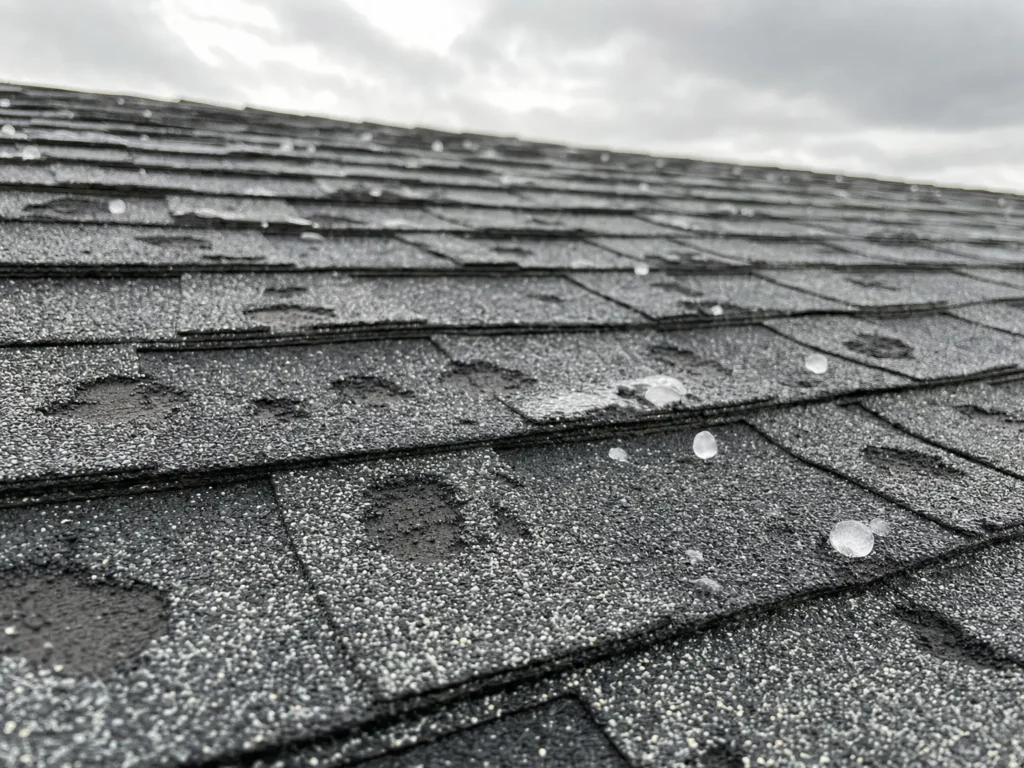
St. Louis puts roofs through a full range of stress in any given year. Summer temperatures can push past 100 degrees, which accelerates granule loss on lower-quality shingles. Winter brings ice and freeze-thaw cycles that exploit any weakness in flashing or underlayment. Spring and fall bring hail events that are among the most frequent in the Midwest. A contractor who only knows how to install a roof, but does not understand how the local climate affects material choice, is not giving you the full picture.
Why impact-resistant shingles are worth a conversation in St. Louis
Class 4 impact-resistant shingles carry a higher upfront cost than standard asphalt shingles. In the St. Louis market, that cost can often be offset by a discount on your homeowner’s insurance premium because many carriers reduce rates for Class 4 installations. On top of that, impact-resistant shingles handle hail events significantly better than standard products. For homes in West County, Chesterfield, or St. Charles County, this is a real conversation worth having with your contractor before you commit to a shingle line. Homeowners in Wildwood can also read our notes on what to look for when comparing roofing companies near you on our Wildwood service page.
Asking your contractor the right material question
Before you sign, ask your contractor what shingle they are recommending and why that specific product makes sense for your home in this climate. A knowledgeable local contractor should be able to speak to the product’s performance characteristics, the warranty structure, and how it holds up in the St. Louis weather pattern. If the answer is simply that it is what they always use, ask a follow-up question about whether impact-resistant options were considered for your location.
11. How to Check a Roofing Company’s Standing Before You Call
Before you pick up the phone, take ten minutes to do this independently:
- Go to BBB.org and search the company name. Look at the accreditation status, the rating, and the complaint history. Read the complaints and the responses, not just the summary.
- Check Google Business Profile. Look at the address listed and whether it matches the address on their website. Look at the photo upload dates to see how recently the profile has been updated.
- Search the Missouri Secretary of State business registry at sos.mo.gov. Confirm the company is registered in Missouri and note the formation date.
- Search the company name plus the word reviews or complaint and read what comes up beyond their own website and directory listings.
- If they mention manufacturer certification, verify it independently through the manufacturer’s contractor locator before the first conversation.
This process takes about ten minutes and tells you more than most in-person conversations do. A company that holds up under a simple background check has nothing to hide. One that does not will usually show gaps before you ever invite them to look at your roof. If you are specifically looking for how to choose the right roofing company near you in Ballwin, we cover that area in full.
If you are ready to take the next step, you can go straight to our roofing services near you in St. Louis page.
12. Your Insurance Company’s Preferred Contractor: What You Need to Know
What a preferred contractor arrangement means
Some insurance companies suggest or steer homeowners toward contractors on their approved vendor list after a storm damage claim. These contractors have typically agreed to certain pricing and process standards with the insurance company. That does not automatically make them the best option for your home. It means they have a working relationship with your insurer that benefits both parties in terms of claim efficiency.
Your rights as a Missouri homeowner
Missouri law gives you the right to choose your own contractor for insurance-covered repairs. Your insurance company cannot require you to use a contractor from their preferred list. Any licensed and insured contractor can work directly with your insurance adjuster, review the claim estimate, and negotiate on your behalf if the scope of work needs to be adjusted. If your insurer tells you otherwise, ask them to put that restriction in writing.
What to watch for with insurance-related jobs
When a job is insurance-funded, the scope of work is tied to what the adjuster approved. Make sure your contractor reviews the insurance estimate before the job starts and identifies anything the adjuster missed or undervalued. A contractor who simply accepts the insurance estimate without reviewing it may be leaving legitimate repairs out of scope. A good contractor will read the estimate, flag anything that is missing, and submit a supplement to the insurance company if the scope needs to be corrected. For more on how to choose the right roofing company near you before you commit to an insurance repair, read our contractor guide.
13. What a Free Roof Inspection Should Actually Cover
What a real inspection looks like
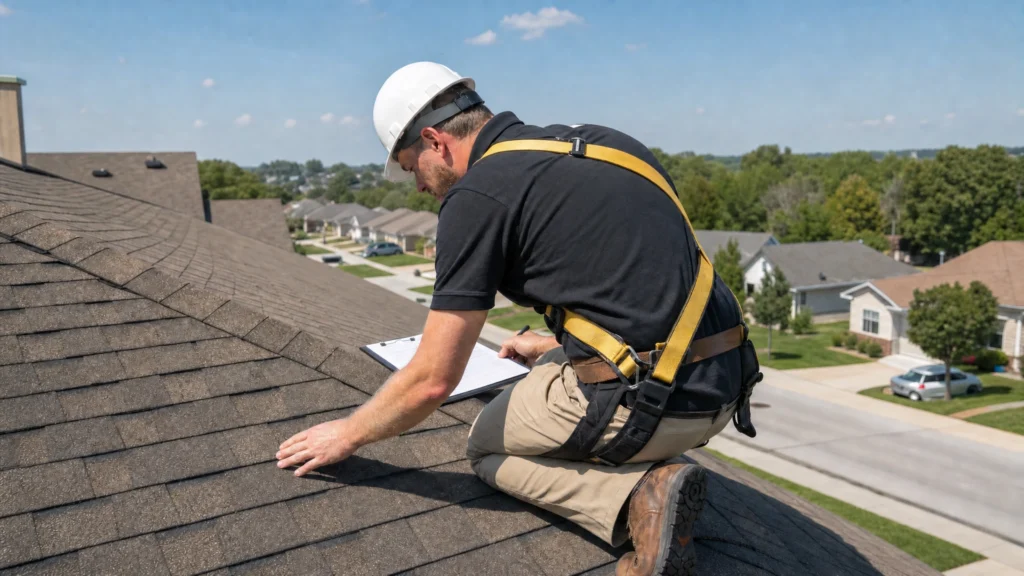
A thorough roof inspection checks the condition of the shingles across the entire surface, the integrity of all flashing at chimneys, walls, valleys, and penetrations, the condition of the ridge cap, the soffit and fascia for rot or damage, the gutter connection points, and the attic for signs of moisture or inadequate ventilation. A complete inspection produces a written report that you keep regardless of whether you hire that contractor. It tells you what your roof actually needs. If you are still working out how to find a trusted local roofing contractor in St. Louis to do that inspection, our contractor guide covers the full process.
How to tell a real inspection from a sales visit
Some contractors use the free inspection as a reason to get on your roof and tell you it needs replacing regardless of its actual condition. Signs of a sales visit rather than a real inspection include a verbal summary with no written report, a strong recommendation to replace the roof without showing you documentation of the damage, and a contract presented before you have had time to review any findings. A real inspection gives you information. A sales visit gives you pressure.
Questions to ask after an inspection
Once an inspection is complete, ask the contractor to show you photos of any damage they documented. Ask them to explain specifically what they found and why it warrants the repair or replacement they are recommending. Ask whether repair is a viable option instead of replacement and what the expected lifespan of the roof is if you choose repair. A contractor who gives you straight answers to those questions is giving you the foundation for a good decision. Commercial property owners can also read our separate guide on what to look for in a roofing contractor before you book an inspection for a commercial building.
14. Frequently Asked Questions
Q: How do I know if a roofing company is reputable in St. Louis?
A: Check their BBB accreditation and complaint history, read Google reviews with attention to recency and detail, verify their registration through the Missouri Secretary of State, and confirm their licensing and insurance independently. A reputable company will hold up under all of those checks without any gaps or inconsistencies.
Q: Should I get multiple quotes for a roof replacement in St. Louis?
A: Yes, and three is the right number. One quote gives you no frame of reference. Two puts you in a binary choice. Three gives you enough data to identify outliers in either direction and ask the right questions about what each contractor is including in their price.
Q: What is a CertainTeed SELECT ShingleMaster and why does it matter?
A: It is CertainTeed’s highest contractor designation, earned through product training, insurance requirements, and a documented track record of quality installations. Contractors who hold this designation can offer extended system warranties that non-certified contractors cannot, which changes the level of protection your roof carries.
Q: How long does a roof replacement take in St. Louis?
A: Most standard residential roof replacements in the St. Louis area take one to three days depending on the size of the home, the pitch of the roof, the complexity of the flashing work, and whether any decking needs to be replaced. A contractor should be able to give you a realistic timeline before the job starts.
Q: What does a roofing labor warranty cover?
A: A labor warranty covers the installation itself, meaning if a leak or failure occurs because of how the roof was installed rather than a defect in the material, the contractor is responsible for fixing it at no charge. Read the labor warranty carefully. Some are limited to one or two years. Others extend to ten or more.
Q: Is a local roofing company better than a national brand?
A: Not automatically, but local companies tend to carry more accountability. They operate in the same community where you live, their reputation depends on the work they do in your neighborhood, and they are reachable after the job in a way that national brands with subcontracted crews often are not.
Q: How do I check if a roofer is licensed in Missouri?
A: Missouri handles roofing licensing at the county and city level rather than the state level. Contact St. Louis County, St. Charles County, or whichever jurisdiction your property falls under and ask what licensing a roofing contractor is required to hold. Then ask your contractor for that specific credential and verify it with the issuing authority.
Q: What should I do if I find hail damage on my roof after a storm?
A: Document what you can see from the ground with photos and note the date of the storm. Contact your homeowner’s insurance company to report potential damage and ask about the claims process. Then get at least two professional inspections from licensed local contractors before the insurance adjuster visits, so you have independent documentation of the damage scope before any negotiations begin. Not sure who to call first? Our full guide on how to choose a roofing company near you in St. Louis before signing anything walks you through the whole process.
15. Why St. Louis Homeowners Choose Exterior Building Solutions
Every item in this guide is something EBS was built around. We are locally owned and based at 15472 Manchester Rd, Ellisville, MO, and we have been working on homes and commercial properties across St. Louis since 2001. That is over two decades of jobs in this market, in this climate, with the same crew and the same standards.
We carry full general liability and workers compensation coverage on every job. We hold CertainTeed SELECT ShingleMaster certification and can offer the full manufacturer system warranty on eligible installations. Our rating with the Better Business Bureau is A+. We do not subcontract our work to unknown crews. The people who come to your home are EBS people.
Every EBS customer also gets a dedicated Client Experience Coordinator whose job is to make sure you are never left wondering what is happening with your project. They confirm every detail before the job starts, keep you updated throughout, and make sure the final walkthrough is completed before the job is closed out. It is one of the things that sets us apart from most roofing companies near you in the St. Louis area. If you are also looking at other exterior work for your home, our guide on how to choose the right exterior contractor near you in St. Louis covers what to look for across every trade.
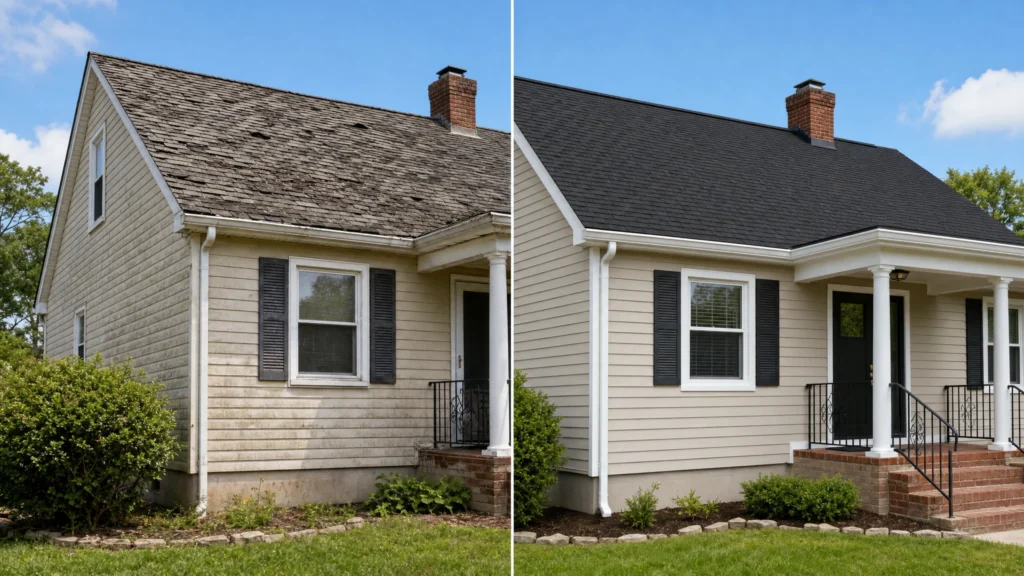
We provide Solutions, not excuses. If your roof needs attention and you want a straight conversation about what that means for your home, call us at (314) 729-7663 or request a free inspection below. We will tell you what we find, explain what your options are, and let you make the decision on your terms.
Three ways to get started today:
Call (314) 729-7663