
Introduction
Winter weather in St. Louis does not just create messy roads. It can also cause serious problems on your roof. After the first snowfall of the season, many homeowners begin noticing leaks near exterior walls or along the edges of their roof, often without understanding why.
One of the most common winter roofing issues we see at Exterior Building Solutions (EBS) is ice damming. This article explains what ice damming is, why it happens, and how homeowners can prevent costly winter leaks.
What Is Ice Damming?
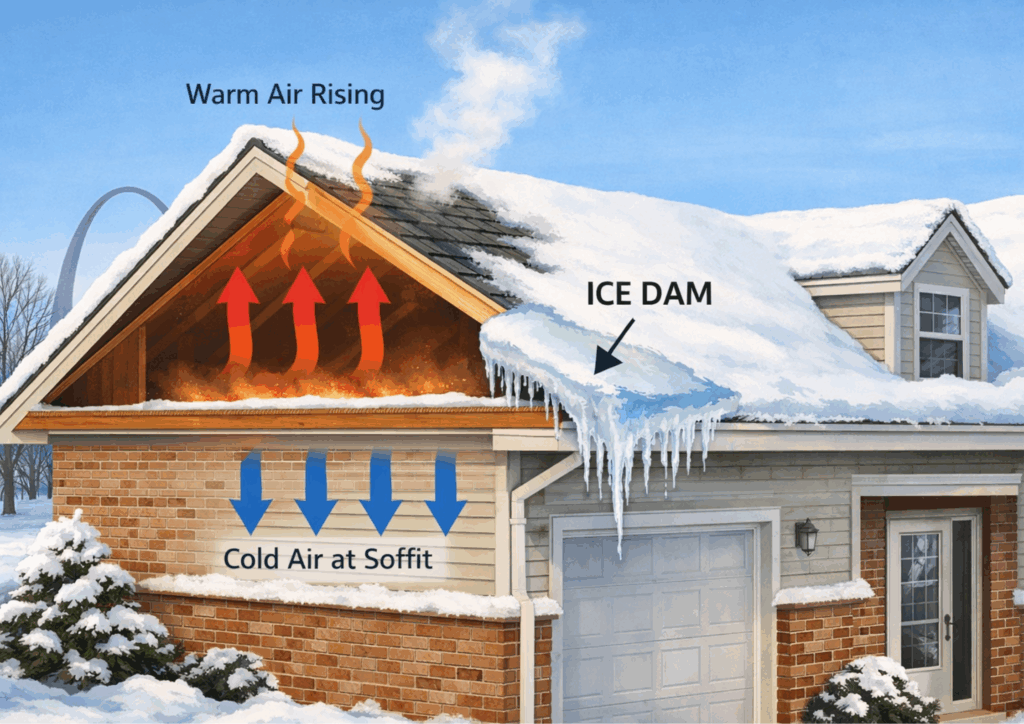
Ice damming is a winter phenomenon that occurs when snow melts on your roof and then refreezes near the roof’s edge. While it may look harmless at first, it can force water back under your shingles and into your home.
Josh explains it simply:
“When we get snowfall on the roof, the heat from inside the house radiates into the attic and melts that snow. As it runs down the roof and hits the cold soffit overhang, it refreezes and starts building up, creating an ice dam.”
Signs Ice Damming May Be Causing a Leak
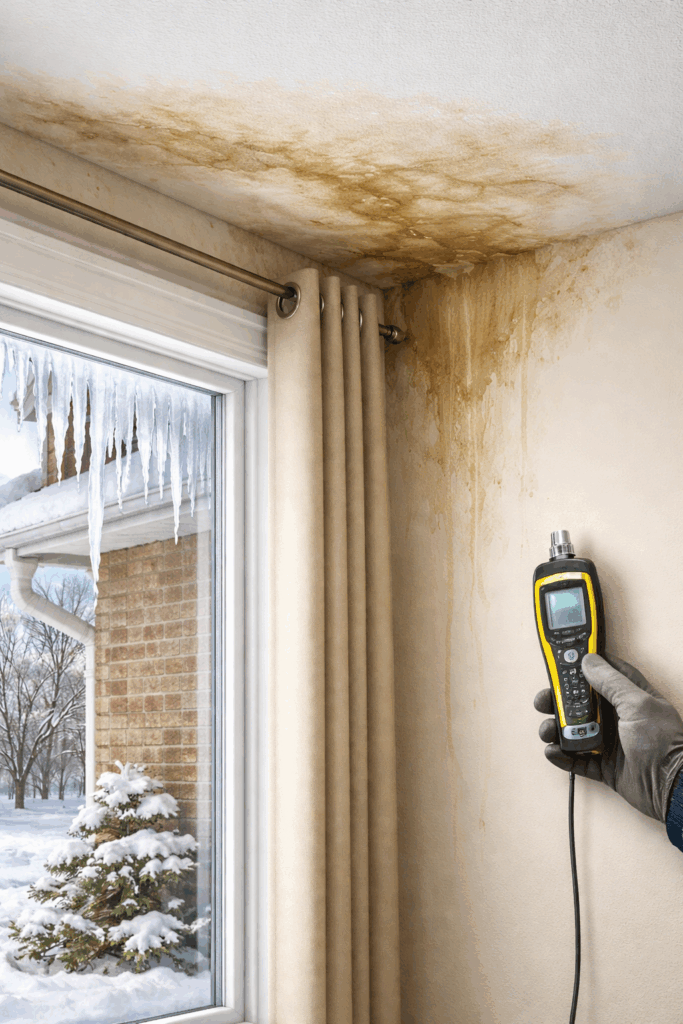
- Water stains on ceilings or walls near exterior walls
- Leaks that only appear after snowfall rather than heavy rain
- Icicles forming along the roof edge or gutters
- Moisture appearing without visible roof damage
The Most Effective Way to Prevent Ice Damming
Proper Attic Ventilation
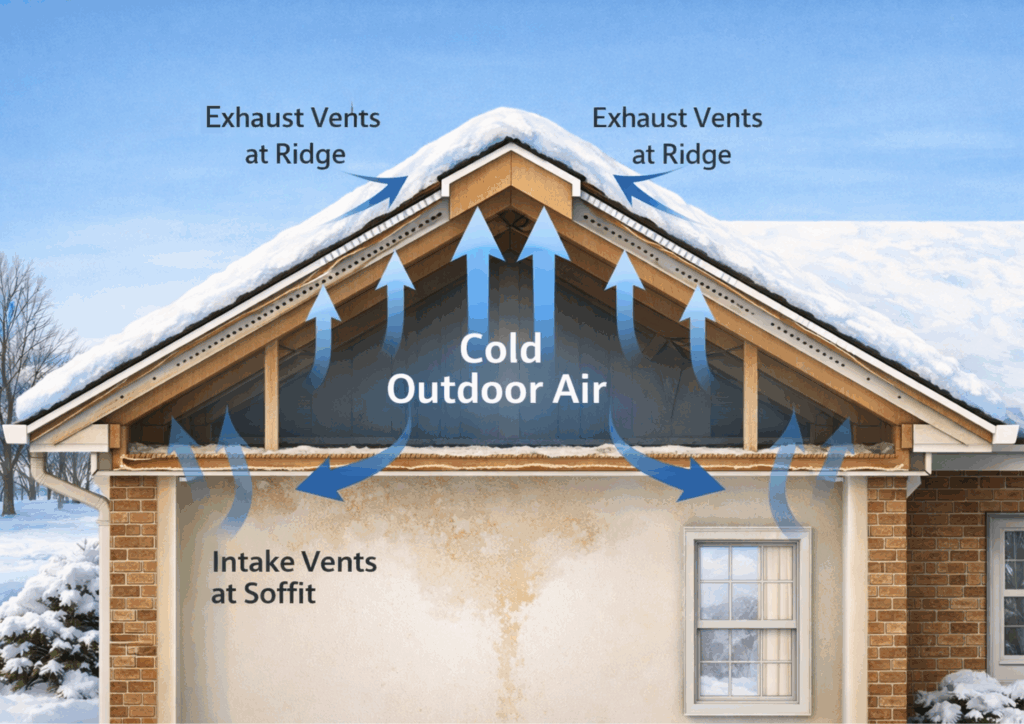
The most effective defense against ice damming is proper attic ventilation. Good intake and exhaust ventilation keeps attic temperatures consistent with the outdoor air, preventing uneven roof melting.
Josh explains why:
If we have good intake vents and good exhaust vents, we are drawing cold outside air into the attic. That keeps the attic temperature consistent with the outside air and prevents uneven melting on the roof.”
Secondary Protection: Ice and Water Shield
Ice and water shield is a waterproof membrane installed along roof eaves during roof replacement. It provides added protection if ice damming occurs by preventing water from entering the home.
Josh puts it this way:
“The ultimate goal is to keep water out. Ice and water shield is an extra layer of protection if ice damming does happen.”
Why Ice Damming Is So Common in St. Louis
Frequent freeze and thaw cycles during St. Louis winters make homes especially vulnerable to ice damming, particularly those with older roofing systems or insufficient attic ventilation.
Key Takeaways
- Proper attic ventilation is the most effective prevention
- Ice damming traps melting snow at the roof edge
- It commonly causes winter leaks near exterior walls
- Ice and water shield adds extra protection
- Early inspections help avoid interior damage
Conclusion
Ice damming is one of the most preventable winter roofing issues when addressed correctly. With proper ventilation and protective materials, homeowners can significantly reduce the risk of leaks and damage.
Call (314) 729-7663 to schedule your inspection and make sure your home is protected for the rest of winter.
FAQs
What causes ice damming on a roof?
Ice damming is caused by heat escaping into the attic, which melts snow on the roof. When that water refreezes at the colder roof edge, it creates a dam that traps additional water.
Is ice damming a roofing problem or a ventilation problem?
In most cases, ice damming is a ventilation or insulation issue rather than a roofing defect. Even new roofs can experience ice damming if airflow is inadequate.
Can ice damming cause serious damage to my home?
Yes. Ice damming can cause interior leaks, insulation damage, mold growth, and long-term structural issues if left untreated.
Does ice and water shield stop ice dam leaks completely?
Ice and water shield greatly reduces leak risk but works best when combined with proper attic ventilation.
When should I have my roof and attic inspected?
If you notice leaks after snowfall or see heavy ice buildup, an inspection should be scheduled as soon as possible.