

“Always inspect your roof after every storm” is frequently-given advice you’ll hear from roofing companies and for good reason: it can save you from costly repair work or even an unplanned roof replacement. Here’s how to identify storm damage.
Why You Need to Inspect Your Roof
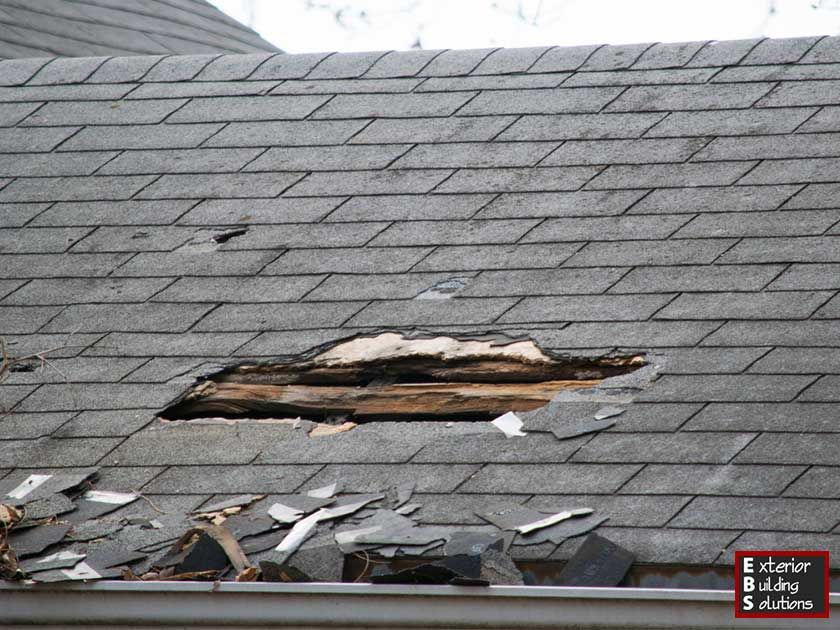
The first thing that comes to most people’s minds when discussing storm damage is torn-off roofing and severe flooding. These conditions are considered extreme; other kinds of storm damage are less obvious and, therefore, require a closer look.
A common mistake among homeowners is assuming that their roof doesn’t need repairs because it looks fine. The problem is, many types of storm damage aren’t readily visible. Leaving it unrepaired will make the roofing problem worse over time and will incur costly repairs or even extensive restoration work.
Types of Storm Damage
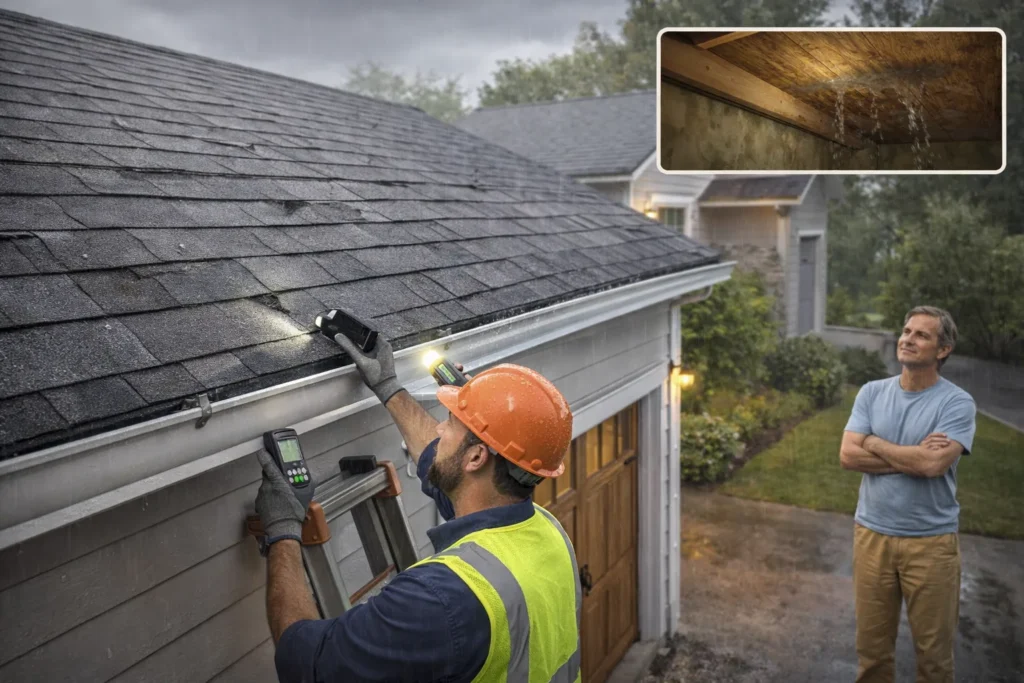
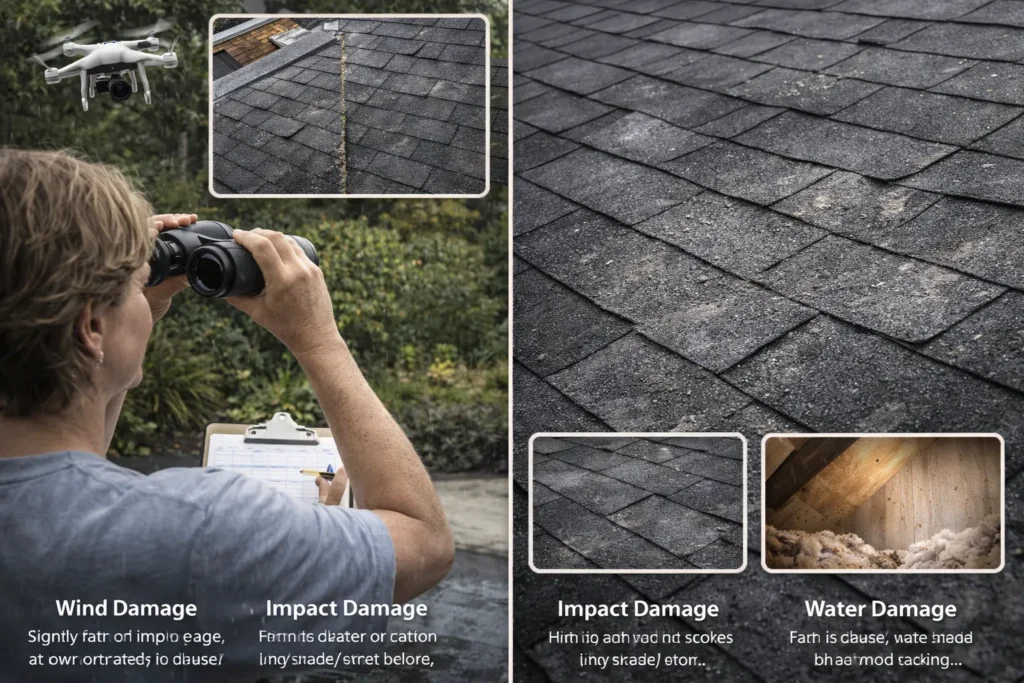
Fortunately, a roof inspection is something that you can do yourself. Take a good pair of binoculars and pen and paper to record your findings. If you have a high-definition camera mounted on a remote-controlled drone, you can use it to record your inspection and send the video to your roofing contractor for review. Either way, the following are the types of storm damage you should look out for on your roof:
Wind damage – Stormy winds that exceed 50 miles per hour (mph) can wreak havoc on standard asphalt shingle roofs. Look for lifted asphalt shingle edges, which may not be as noticeable on laminate shingles as it is on three-tab shingles. Other signs of wind damage include splitting, cracking or horizontal creases that appear about an inch below shingle edges.
Impact damage – Hailstones and airborne debris can hit the roofing surface, which can result in dents, craters or cracks. Hail damage can look like asphalt shingle blisters, the latter of which is caused by a manufacturing error and, therefore, not covered by insurance.
Water damage – Water damage happens when moisture infiltrates into the roof deck. In addition to being hidden from view, water damage has long-term effects, such as structural damage and mold growth. Your roof inspection should include inspecting the attic for signs of moisture damage, such as water stains, clumping insulation and “sweating” attic walls. If you notice any of these signs, call your roofing contractor as soon as possible.
Exterior Building Solutions is your leading provider of roofing services, including emergency roof repair. Give us a call at (314) 470-8783. You can also fill out our contact form to schedule an appointment. We serve customers in Chesterfield and St. Louis, MO, as well as the surrounding communities.